
Free tool · runs in your browser
Beard Styles for Your Face Shape
What beard style suits me? Upload one straight-on photo, ideally clean-shaven or with a short beard. The tool measures your face shape (oval, round, square, heart, diamond or oblong), names the beard styles that balance it and the ones to go easy on, then reads your jaw width and chin length for the details: where to keep fullness, where to keep it tight.
Drop a photo, paste one, or choose a file
Straight-on, whole face visible, even light. JPG, PNG or WebP.
Runs in your browser. Your photo never leaves your device.
By face shape
Best beards for every face shape
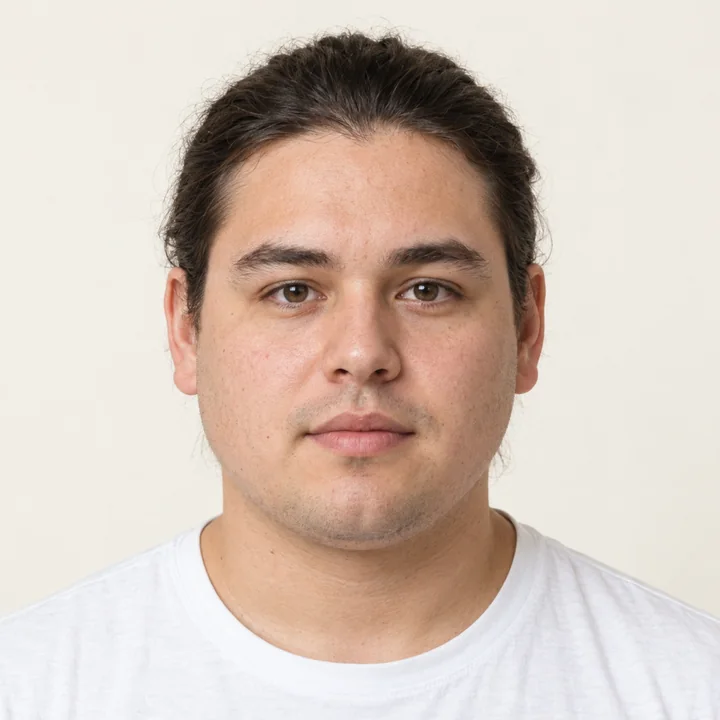
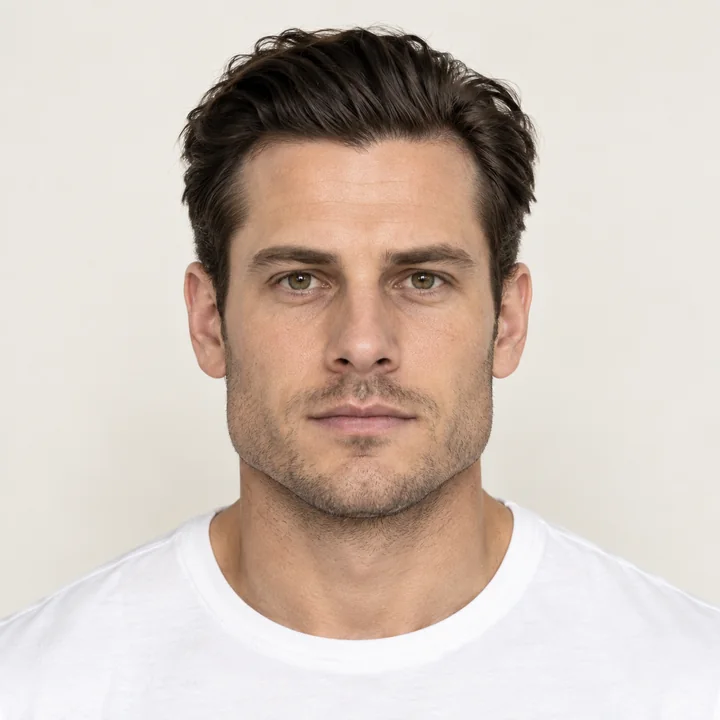
How it is measured
Balance the face, then fit the jaw.
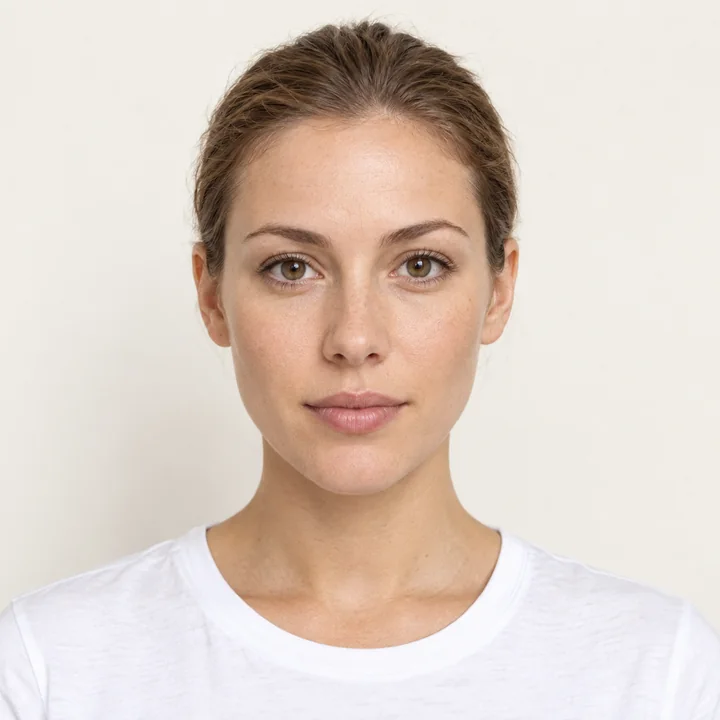
A beard is the one feature you can reshape every week, so it works like a frame: it adds width or length where the face lacks it and stays tight where the face already has it. The tool measures your face shape from five ratios exactly like the face shape detector, then adds two lower-face readings a beard can change: jaw width against cheekbone width, and how much of the lower face the chin takes up.
- Oval
- Most styles: short boxed beard, heavy stubble, corporate beard, Van Dyke.
- Round
- Length at the chin, tight sides: short boxed beard, goatee, anchor, Van Dyke.
- Square
- Softer corners: rounded short beard, circle beard, Balbo, light stubble.
- Heart
- Fullness at the jaw and chin: medium full beard, Garibaldi, boxed beard.
- Diamond
- Width at the jaw: full beard, boxed beard, Garibaldi, chin curtain.
- Oblong
- Width at the sides, short chin: short full beard, mutton chops, heavy stubble.
Measure it yourself
How to shape a beard for your face
Whatever the style, these five lines decide whether a beard flatters the face:
- 1Neckline: about one finger above the Adam's apple. A neckline on the jaw makes the face look heavier.
- 2Cheek line: keep it natural, or take it down only slightly. A cheek line cut low makes a face look wider.
- 3Jaw corners: keep fullness there if your jaw is narrow, keep them tight if your jaw is already wide.
- 4Chin: add length to lengthen a short or round face, keep it short on a long face.
- 5Moustache: trimmed off the lip line. It frames the mouth, which matters more on a short beard.
Skip the ruler: the free tool above does it from one photo in about 30 seconds ↑
Sources
What this is based on.
The measurement and its reference ranges come from published research. Studies use different methods and populations, so compare your number with the range shown on this page rather than with other tools.
- 1.
Farkas LG, Katic MJ, Forrest CR, et al. (2005). International anthropometric study of facial morphology in various ethnic groups/races. Journal of Craniofacial Surgery. PubMed 16077306
Face width and height proportions measured across ethnic groups. Face-shape names are a styling convention, not a medical classification.
- 2.
Kartynnik Y, Ablavatski A, Grishchenko I, Grundmann M (2019). Real-time facial surface geometry from monocular video on mobile GPUs. arXiv. arXiv:1907.06724
The face-mesh model that places the 468 surface landmarks this tool measures from.
- 3.
Ablavatski A, Vakunov A, Grishchenko I, et al. (2020). Real-time pupil tracking from monocular video for digital puppetry. arXiv. arXiv:2006.11341
The iris model that adds 10 eye landmarks (478 in total), used for pupil-based reference lines.
Our own data: how much each reading moves when the same face is photographed again is published on the methodology page. How we choose sources.
Related tools
Face Shape Detector
Oval, round, square, heart, diamond or oblong.
Hairstyle Finder
Cuts for your face shape, and should you get bangs.
Jawline Test
Jaw angle, jaw width ratio, chin offset, chin height.
Jaw to Cheekbone Ratio
Bigonial ÷ bizygomatic: tapered, balanced or square.
Glasses for Your Face Shape
Frame styles and frame size for your shape.
Masculinity Test
How masculine is my face, out of 100.
PSL Score Test
A measured 1–8 PSL rating with your tier.
FAQ
What beard style suits my face?+
It depends on your face shape: length at the chin for round faces, softer corners for square ones, fullness at the jaw for heart and diamond faces, width at the sides for long faces. Upload a photo to get your measured shape and the matching styles.
What is the best beard for a round face?+
One that adds length and an angle at the chin while keeping the cheeks clean: a short boxed beard with tight sides, a goatee, an anchor or a Van Dyke. Avoid full sides and mutton chops, which add width.
What beard suits a square face?+
A beard that softens the jaw corners: a rounded short beard, a circle beard, a Balbo or light stubble. Keep a little length over the jaw corner and taper the sides. A sharply lined-up beard makes the corner sharper, if that is the look you want.
Can a beard make my jawline look stronger?+
Yes. A beard kept full at the jaw corners and lined up along the jaw adds width and definition to a narrow or soft jaw, which is why so many men grow one. The jaw readings here tell you whether to add fullness at the corners or keep them tight.
Should I upload a photo with my beard?+
A short beard is fine. A full beard hides the jaw corner and the true jaw width, so the shape can read wider than it is. If you can, use a photo where the jawline is visible.
Is my photo uploaded?+
No. Everything runs in your browser.
One reading here.
Nineteen in the app.
A controlled scan, every reading against its ideal band, bone vs trainable, a plan, and a 3D model on Face ID iPhones.