
Free tool · runs in your browser
See Your Face in 3D
Upload one front selfie and get a 3D model of your face in a few seconds. Spin it to see your profile and three-quarter angles you never see in a mirror, switch to clay to see the shape alone, and save a picture of it. No app, no depth camera, and your photo never leaves your device.
Drop a front selfie, or choose a file
Straight-on, whole face visible, even light. Your 3D face is built in a few seconds.
Runs in your browser. Your photo never leaves your device.
NewSymmi Lab · full face analysis
Your face in 3D. Now reshape it.
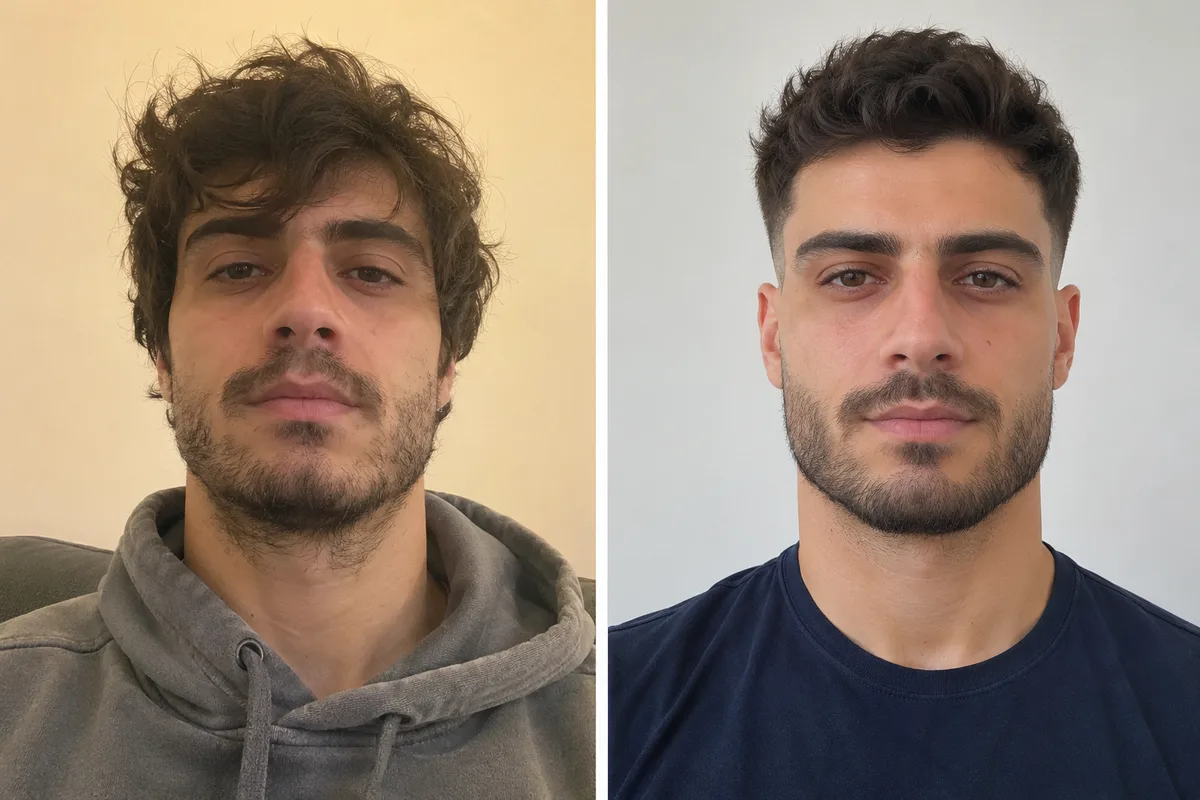
Nose, chin, lips and jaw adjusted on your own 3D face, plus your face score, 30 modules, 4 haircuts on your photo and a step-by-step plan.
- Your face score and where you rank
- 4 haircuts tried on your own face
- Your colours, shades and a step-by-step plan
$14.99 once · no subscription · ready in minutes
Sample result
How it is measured
478 points, one surface.
A face-mesh model places 478 points on your photo, each with an estimated depth: how far forward the nose tip, the lips and the chin sit compared with the cheeks and the forehead. Those points are joined into the standard 898-triangle face surface, and your photo is laid over it. It runs on your device in the browser. Because the depth comes from a single photo rather than a depth camera, the side view is a close approximation, not a scan.
- Photo
- Your own photo on the 3D surface, from any angle.
- Clay
- The surface alone, lit like a sculpture: the clearest way to see your shape.
- Mesh
- The 478-point mesh the model is built from.
- Reshape
- Narrower nose and fuller lips are free; chin, jaw and nose bridge are in Symmi Lab. Hold to see the before.
Measure it yourself
How to get the best 3D face
- 1Take a straight-on selfie with the camera at eye level, an arm's length away.
- 2Look into the lens with a relaxed, closed mouth. A turned head makes one side of the model lopsided.
- 3Use even daylight and take glasses off: frames sit over the points around the eyes.
- 4Upload it and drag the model to turn it. Try the clay look to see your shape without skin tone.
Skip the ruler: the free tool above does it from one photo in about 30 seconds ↑
Sources
What this is based on.
The measurement and its reference ranges come from published research. Studies use different methods and populations, so compare your number with the range shown on this page rather than with other tools.
- 1.
Kartynnik Y, Ablavatski A, Grishchenko I, Grundmann M (2019). Real-time facial surface geometry from monocular video on mobile GPUs. arXiv. arXiv:1907.06724
The face-mesh model that places the 468 surface landmarks this tool measures from.
- 2.
Ablavatski A, Vakunov A, Grishchenko I, et al. (2020). Real-time pupil tracking from monocular video for digital puppetry. arXiv. arXiv:2006.11341
The iris model that adds 10 eye landmarks (478 in total), used for pupil-based reference lines.
Our own data: how much each reading moves when the same face is photographed again is published on the methodology page. How we choose sources.
Related tools
Nose Job Simulator
A narrower nose on your own photo.
Lip Filler Simulator
Fuller lips on your own photo.
Side Profile Analysis
Measured profile angles from a side photo.
Face Symmetry Test
Symmetry index plus eight readings.
Face Shape Detector
Oval, round, square, heart and more.
Nose Shape Test
Your nose type from a side photo.
Jawline Test
Jaw angle, width and chin height.
Mirror Face Test
Your left half doubled, your right half doubled.
FAQ
How can one photo make a 3D face?+
The face-mesh model was trained on many faces with known 3D shape, so it estimates how far each of 478 points sits in depth from a single image. That is enough for a convincing 3D face from the front and at an angle; a depth camera or several photos would be needed for a true scan.
How accurate is the side view?+
It follows the overall shape well, such as how far the nose and chin come forward, but fine detail such as a small bump on the nose bridge is smoothed. For measured profile angles, use the side profile analysis with a real side photo.
Can I change my nose or lips on the 3D model?+
Yes. A narrower nose and fuller lips are free, shown on your photo and on the 3D face. A longer or more forward chin, a slimmer jaw and a smoother nose bridge are part of Symmi Lab.
Do I need an app or a Face ID iPhone?+
No. It runs in any modern browser on a phone or computer, from an ordinary photo.
Is my photo uploaded?+
No. The 3D face is built on your device and your photo never leaves it.
One reading here.
Nineteen in the app.
A controlled scan, every reading against its ideal band, bone vs trainable, a plan, and a 3D model on Face ID iPhones.
Symmi Lab · new
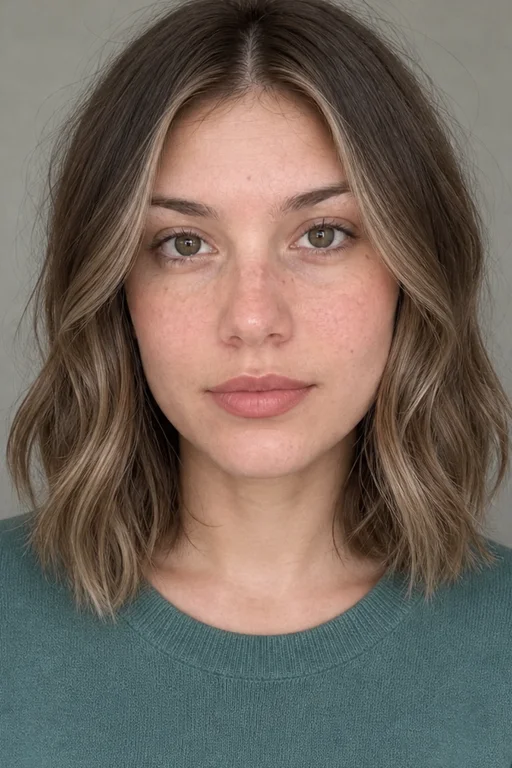
Your full face analysis, with 4 haircuts on your own face.