
Free tool · runs in your browser
Face Shape Detector
Upload a photo. Symmi maps 478 landmarks, takes four measurements, and tells you which of six face shapes you are, with a breakdown for each. Measured, not guessed.
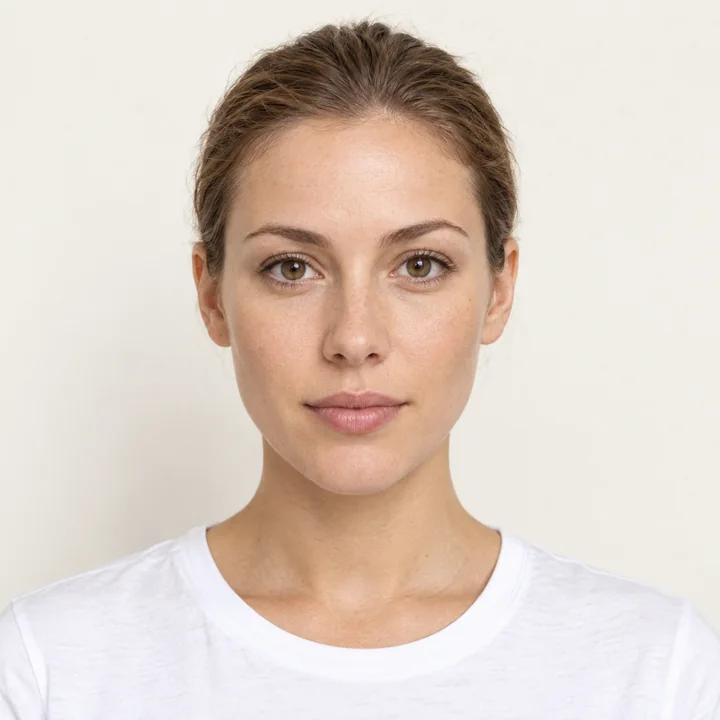 Oval
Oval Round
Round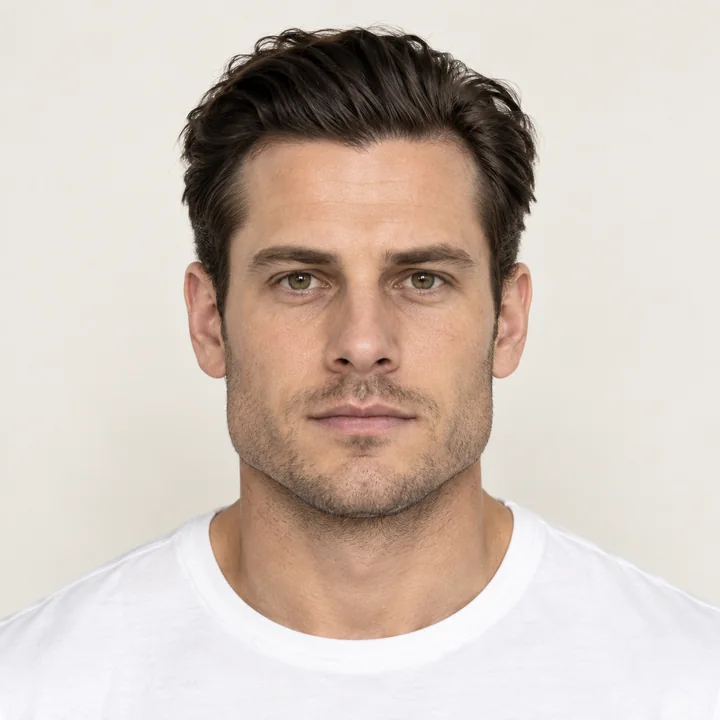 Square
Drop a photo, paste one, or choose a file
Straight-on, whole face visible, even light. JPG, PNG or WebP.
Runs in your browser. Your photo never leaves your device.
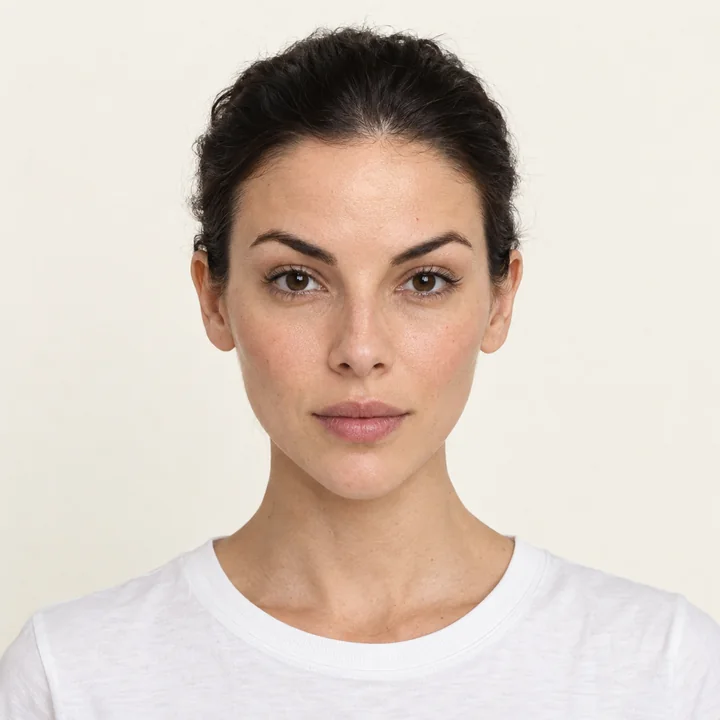 Heart
Heart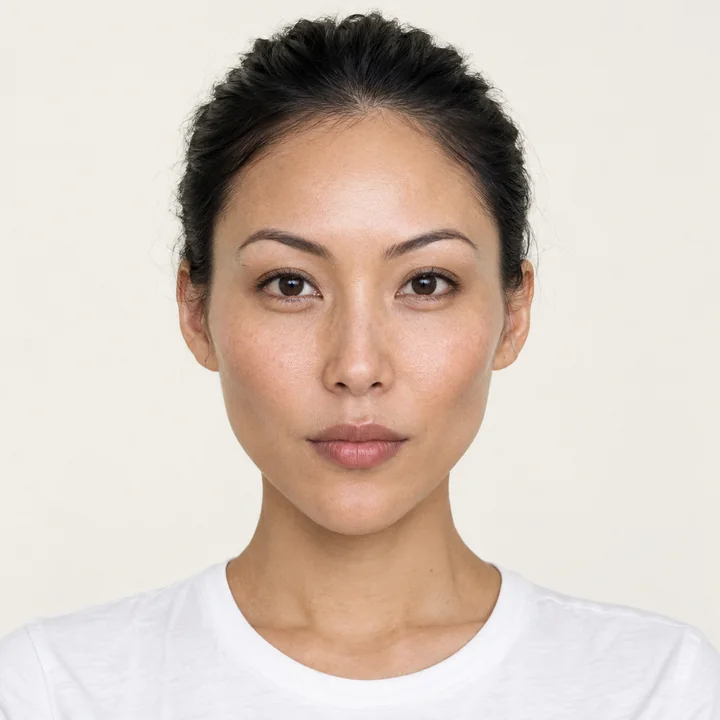 Diamond
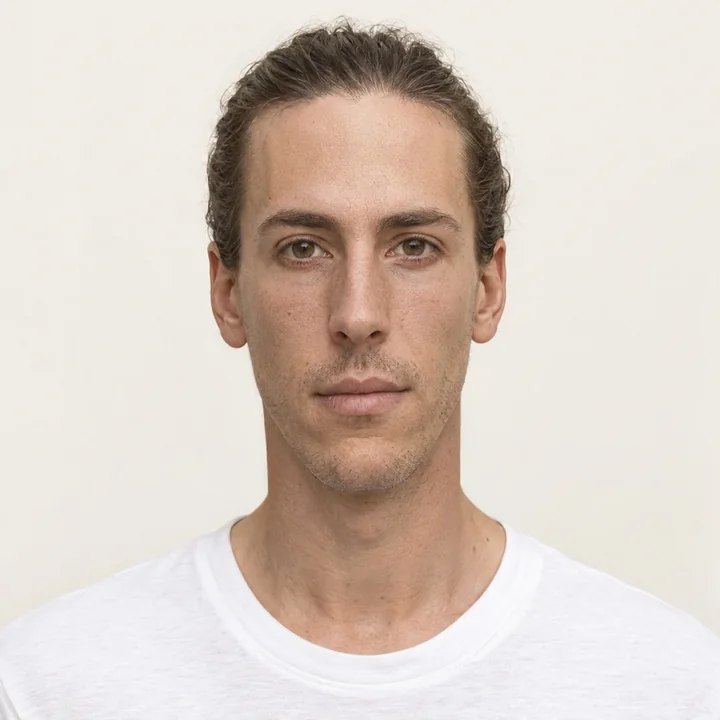 Oblong
How it is decided
Four measurements. Six shapes.
Face shape is not a feature, it is a set of ratios: forehead width at the temples, face width at the cheekbones, jaw width, and face length from an estimated hairline to the chin, plus the angle the jaw makes at the chin. Each shape has a range for those ratios; your photo is scored against all six and the bars show how close you sit to each.
Oval
The most balanced proportions. Forehead close to the jaw in width, cheekbones slightly wider than both, a softly rounded chin.
- Widest
- Cheekbones
- Length : width
- 1.4 – 1.5 : 1
- Jaw
- Gentle, about 108–116°
Round
Nearly as wide as it is long, with full cheeks and a rounded chin. Curves rather than corners.
- Widest
- Cheekbones
- Length : width
- Under 1.4 : 1
- Jaw
- Wide and soft, over 125°
Square
Jaw more than four fifths of the face width, length close to width, and a jawline with real corners.
- Widest
- Jaw ≈ cheeks
- Length : width
- Under 1.45 : 1
- Jaw
- Angular, 118–128°
Heart
A forehead clearly wider than the cheek line, tapering to a narrow, often pointed chin.
- Widest
- Forehead
- Length : width
- Moderate
- Jaw
- Narrow, under 109°
Diamond
Cheekbones far wider than both the forehead and the jaw. The least common of the six.
- Widest
- Cheekbones
- Length : width
- Moderate
- Jaw
- Narrow, pointed chin
Oblong
A longer oval: straight sides, similar widths top to bottom, and a length past 1.5 times the width.
- Widest
- All similar
- Length : width
- Over 1.5 : 1
- Jaw
- Narrow, under 108°
Example faces are AI-generated to illustrate each shape.
Face shapes for men: chart, hair and beards →
Compare six outlines and see how hair coverage and beard shape can influence the view.
Sources
What this is based on.
The measurement and its reference ranges come from published research. Studies use different methods and populations, so compare your number with the range shown on this page rather than with other tools.
- 1.
Farkas LG, Katic MJ, Forrest CR, et al. (2005). International anthropometric study of facial morphology in various ethnic groups/races. Journal of Craniofacial Surgery. PubMed 16077306
Face width and height proportions measured across ethnic groups. Face-shape names are a styling convention, not a medical classification.
- 2.
Kartynnik Y, Ablavatski A, Grishchenko I, Grundmann M (2019). Real-time facial surface geometry from monocular video on mobile GPUs. arXiv. arXiv:1907.06724
The face-mesh model that places the 468 surface landmarks this tool measures from.
- 3.
Ablavatski A, Vakunov A, Grishchenko I, et al. (2020). Real-time pupil tracking from monocular video for digital puppetry. arXiv. arXiv:2006.11341
The iris model that adds 10 eye landmarks (478 in total), used for pupil-based reference lines.
Our own data: how much each reading moves when the same face is photographed again is published on the methodology page. How we choose sources.
FAQ
Is my photo uploaded?+
No. The face model runs inside your browser using WebAssembly. The photo stays in your device's memory and is discarded when you leave the page. Nothing is stored.
Why did I get two shapes with similar scores?+
Because you are between them. Roughly a quarter of faces sit on a boundary. Read both; the ratios below the result tell you which way you lean.
Why does the result change between photos?+
The ratios are geometry, so anything that changes the geometry in the picture changes the result: a wide-angle selfie widens the middle of the face, a tilted head shortens it, hair over the temples hides the forehead width. Use a straight-on photo at arm's length or further, with the hairline and jaw visible.
How is this different from the Symmi app?+
Same 478 landmarks, with the shape rules tuned for uploaded photos. The app adds 19 further readings in degrees and ratios, 13 symmetry markers, a 3D model on Face ID iPhones, and a plan for the readings that training can move.
Which face shape is best?+
None. Shape is a description, not a score. It is useful for choosing glasses and where to put hair volume, and it is one of the few readings that does not change with training, because it is mostly bone.
Shape is one reading.
Symmi has 19 more.
Canthal tilt, jaw width, midface ratio, symmetry, skin, and a 3D model of your face. All on your phone.