
Free · camera stays on your device
How Do Others See Me?
You have never seen your face the way other people do. Every mirror flips it, so the face you know is reversed. Turn on your camera and this page shows you un-flipped, exactly as friends, strangers and photos see you, next to the mirror version, so you can see what changes and why photos of you look “off”.
See yourself the way others do
Your browser will ask for the camera. Nothing is recorded or uploaded.
The camera stays on this device. Nothing is recorded or uploaded.
NewSymmi Lab · full face analysis
See your whole face, not one number.
Your face score and rank, 30 modules measured on your photo, 4 haircuts on your own face, your exact colours and a step-by-step glow-up plan.
- Your face score and where you rank
- 4 haircuts tried on your own face
- Your colours, shades and a step-by-step plan
$9.99 once · no subscription · ready in minutes
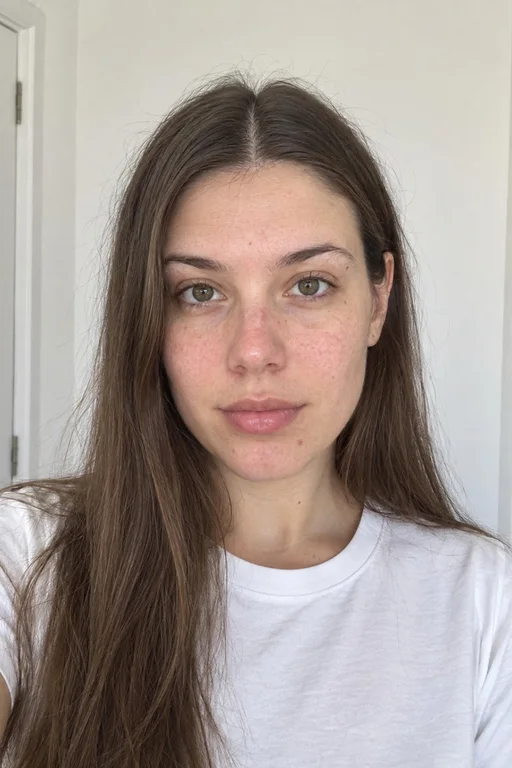
Your photo
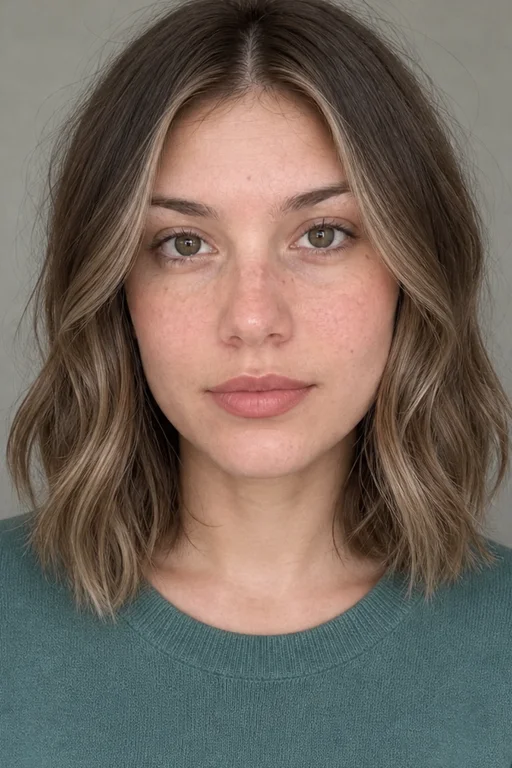
Your best look
Sample result
How it is measured
Mirror vs camera: what changes
Faces are not perfectly symmetric. A parting, one higher brow, a nose that leans a little, a smile that lifts more on one side: in a mirror all of these sit on the opposite side from where everyone else sees them. You have looked at the mirrored version every day, so it feels right, and the true version can look strange. Other people see only the true version, so to them it is simply your face.
- How others see you
- Not flipped: the true view, the same as photos.
- Mirror
- Flipped left to right: the face you know.
- Side by side
- Both at once, to spot what moves.
Measure it yourself
See yourself as others do
- 1Tap the button above and allow the camera. Nothing is recorded or uploaded.
- 2Look at the true view for a minute. The strangeness fades as it becomes familiar.
- 3Switch to side by side and watch your parting, brows and smile swap sides.
- 4Take a snapshot to compare with your favourite selfie.
Skip the ruler: the free tool above does it from one photo in about 30 seconds ↑
Sources
What this is based on.
The measurement and its reference ranges come from published research. Studies use different methods and populations, so compare your number with the range shown on this page rather than with other tools.
- 1.
Mita TH, Dermer M, Knight J (1977). Reversed facial images and the mere-exposure hypothesis. Journal of Personality and Social Psychology. doi:10.1037/0022-3514.35.8.597
People preferred their mirror image, while friends preferred their true image: the familiarity effect.
- 2.
Wang TT, Wessels L, Hussain G, Merten S (2017). Discriminative thresholds in facial asymmetry: a review of the literature. Aesthetic Surgery Journal. PubMed 28200081
How much left–right difference people can notice in a face.
- 3.
Kartynnik Y, Ablavatski A, Grishchenko I, Grundmann M (2019). Real-time facial surface geometry from monocular video on mobile GPUs. arXiv. arXiv:1907.06724
The face-mesh model that places the 468 surface landmarks this tool measures from.
- 4.
Ablavatski A, Vakunov A, Grishchenko I, et al. (2020). Real-time pupil tracking from monocular video for digital puppetry. arXiv. arXiv:2006.11341
The iris model that adds 10 eye landmarks (478 in total), used for pupil-based reference lines.
Our own data: how much each reading moves when the same face is photographed again is published on the methodology page. How we choose sources.
Related tools
FAQ
How do others see me?+
Un-flipped: the opposite of your mirror. They also see you moving, from many angles and in different light, but from the front the true view on this page is what they see.
What do I look like to others?+
Like your mirror image reversed. Any asymmetry in your face, parting or smile appears on the other side. That is why your face can look unfamiliar in photos even though friends see nothing wrong.
Is the mirror or the camera more accurate?+
The camera, when it isn't flipped. A mirror reverses left and right. Most phone front cameras show a mirrored preview and save an un-flipped photo, which is why the saved selfie looks different from the preview.
Why do I look worse in photos than in the mirror?+
Familiarity: people prefer the version of their face they see most, the mirrored one. Close-up phone lenses also widen the nose and shrink the jaw. Hold the phone at arm's length and the photo looks more like you.
Do others see me as more attractive than I see myself?+
Often, yes. People judge their own photos more harshly than friends do, partly because of the mirror effect. Friends are used to your true face.
Is anything recorded?+
No. Nothing is recorded or uploaded. A snapshot is saved only when you tap Snapshot.
One reading here.
Nineteen in the app.
A controlled scan, every reading against its ideal band, bone vs trainable, a plan, and a 3D model on Face ID iPhones.
Symmi Lab · new
Your full face analysis, with 4 haircuts on your own face.