
Honest photo test · free · private
Am I Ugly?
Stop asking strangers. Upload one selfie and get an honest, measured answer: your face score out of 10 from eight proportions drawn on your face, the exact readings that pull it down, and the ones you can change. Most people who ask this score between 6 and 8, and the biggest drag is usually the photo, not the face.
Drop a photo, paste one, or choose a file
Straight-on, whole face visible, even light. JPG, PNG or WebP.
Runs in your browser. Your photo is never uploaded.
NewSymmi Lab · full face analysis
See your whole face, not one number.
Your face score and rank, 30 modules measured on your photo, 4 haircuts on your own face, your exact colours and a step-by-step glow-up plan.
- Your face score and where you rank
- 4 haircuts tried on your own face
- Your colours, shades and a step-by-step plan
$9.99 once · no subscription · ready in minutes
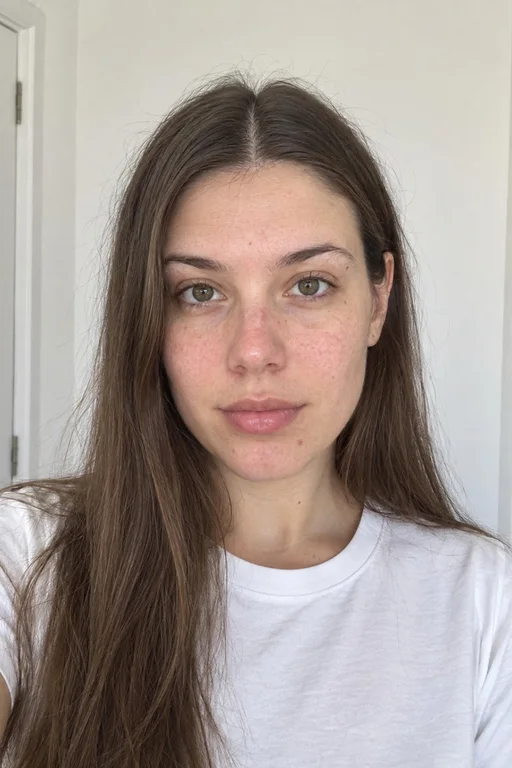
Your photo
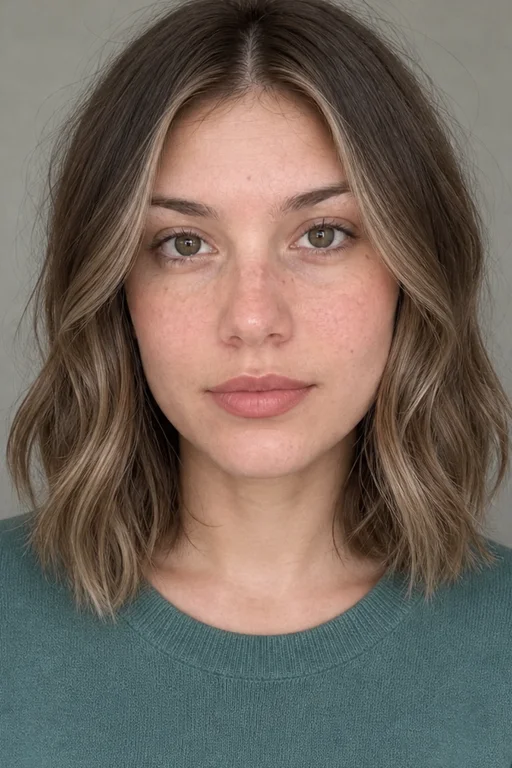
Your best look
Sample result
How it is measured
An honest answer, not an opinion
Strangers online rate on a mood. This test measures: AI maps 478 points on your face and checks eight proportions people react to, symmetry, facial thirds, face width to height, midface ratio, eye tilt, eye spacing and the jaw. Each is scored against its reference band, so you see a number and the reason behind it. The same photo always gets the same answer.
- Your score
- Out of 10, from eight measured proportions.
- What pulls it down
- The readings outside their band, named one by one.
- What you can change
- Photo, grooming, hair, puffiness and jaw definition.
- What you can't
- Bone readings like eye spacing. Knowing them helps you style around them.
Measure it yourself
Why you look worse in photos than in the mirror
If you hate your selfies, these are the usual reasons, and each one lowers your score:
- 1Close-up lens: a phone at 30 cm widens the nose and shrinks the jaw. Hold it at arm's length or further.
- 2Flipped image: you know your mirror face, so the true photo looks off. That is not ugliness, it is unfamiliarity.
- 3Overhead light: it hollows the eyes and adds shadows. Face a window instead.
- 4Head tilt: a slight tilt makes one side look bigger. Keep both ears equally visible.
Skip the ruler: the free tool above does it from one photo in about 30 seconds ↑
What's normal
What your score means
- 7.5 and up
- What it means: Clearly attractive proportions
- How common: Uncommon
- 6.5 – 7.4
- What it means: Above average
- How common: Common
- 5.5 – 6.4
- What it means: Average: not ugly
- How common: Most people
- Under 5.5
- What it means: A few readings outside their bands, often the photo
- How common: Less common
No score here means ugly. A low number names one or two readings, and the photo is the first thing to fix.
Sources
What this is based on.
The measurement and its reference ranges come from published research. Studies use different methods and populations, so compare your number with the range shown on this page rather than with other tools.
- 1.
Langlois JH, Kalakanis L, Rubenstein AJ, et al. (2000). Maxims or myths of beauty? A meta-analytic and theoretical review. Psychological Bulletin. doi:10.1037/0033-2909.126.3.390
Meta-analysis: people largely agree on who is attractive, across ages and cultures.
- 2.
Langlois JH, Roggman LA (1990). Attractive faces are only average. Psychological Science. doi:10.1111/j.1467-9280.1990.tb00079.x
Averaged composite faces were rated more attractive than most individual faces.
- 3.
Perrett DI, May KA, Yoshikawa S (1994). Facial shape and judgements of female attractiveness. Nature. doi:10.1038/368239a0
The most attractive faces were not simply average, so averageness is only part of the picture.
- 4.
Rhodes G (2006). The evolutionary psychology of facial beauty. Annual Review of Psychology. PubMed 16318594
Review of the main factors in facial attractiveness: averageness, symmetry and sex-typical features.
- 5.
Kartynnik Y, Ablavatski A, Grishchenko I, Grundmann M (2019). Real-time facial surface geometry from monocular video on mobile GPUs. arXiv. arXiv:1907.06724
The face-mesh model that places the 468 surface landmarks this tool measures from.
- 6.
Ablavatski A, Vakunov A, Grishchenko I, et al. (2020). Real-time pupil tracking from monocular video for digital puppetry. arXiv. arXiv:2006.11341
The iris model that adds 10 eye landmarks (478 in total), used for pupil-based reference lines.
Our own data: how much each reading moves when the same face is photographed again is published on the methodology page. How we choose sources.
Related tools
FAQ
Am I ugly?+
Probably not. Most people who take this test score between 6 and 8 out of 10, which is average to above average. Upload a straight-on selfie and you get a measured answer with the exact readings that raise and lower it.
How do I know if I'm ugly or just unphotogenic?+
Retake the photo straight on at arm's length in window light and compare the scores. If the number jumps, the photo was the problem. If it stays put, the breakdown names the readings behind it.
Why do I look ugly in photos but fine in the mirror?+
The camera lens distorts close-up faces, photos are not flipped like your mirror, and overhead light adds shadows. All three make a normal face look worse. The tips above fix most of it.
What if my score is low?+
A low score names one or two readings outside their band. Some change with grooming, hair, weight and posture; others are bone and are handled with styling. Symmi Lab shows the haircut, colours and steps for your face on your own photo.
Is this test mean?+
No. It measures proportions and tells you what they mean, without insults. It is the honest answer a friend would give with a ruler.
Is my photo stored?+
No. The test runs in your browser and your photo never leaves your device.
One reading here.
Nineteen in the app.
A controlled scan, every reading against its ideal band, bone vs trainable, a plan, and a 3D model on Face ID iPhones.
Symmi Lab · new
Your full face analysis, with 4 haircuts on your own face.