
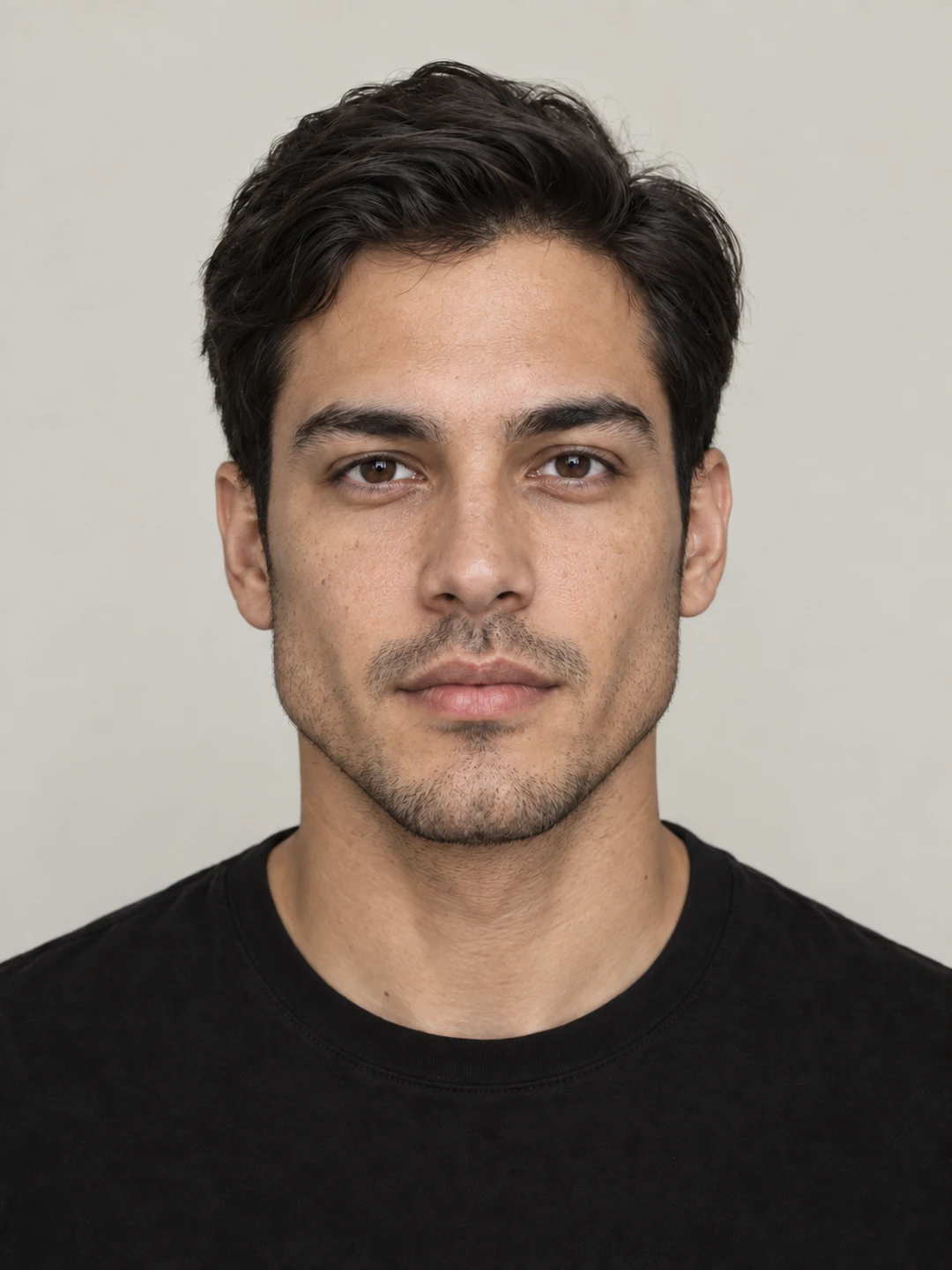
Short answer: the tricks work on the photo, and the tools can see it. Chin down and camera high moved the jaw angle 10° and the canthal tilt 2.3°. A three-quarter turn cost 28 symmetry points. Jaw jutting moved the jaw angle 0.4°.
What we did
Looksmax forums keep a long thread of things that make a face photograph better without changing the face. Skip the makeup, contouring, editing apps and dating-profile advice and what is left is a short list of poses: push the jaw forward and clench, smile a little so the nose reads smaller, purse the lips for the same reason, dip the chin and raise the camera, squint to hide the upper eyelid, tape the brows, turn to your best side.
We took one straight-on photo of an example face, made one variant per trick with everything else held constant, and ran every photo through the same five browser tools: face symmetry, jawline, facial ratios, canthal tilt and fWHR. All eight photos detected a face, including the turned one. Then we lined the numbers up.
What counts as a change: the tools print to a tenth of a degree and a hundredth of a ratio, and two photos of the same face at rest disagree at that level. So the lists below include only readings that moved at least 1° for an angle, 0.03 for a ratio, or 1 point on the symmetry index.
Jaw jutting and clenching
The thread calls this one "simple and well known, free and instant": push the lower jaw forward and flex the masseters. From the front, the camera sees almost none of it.
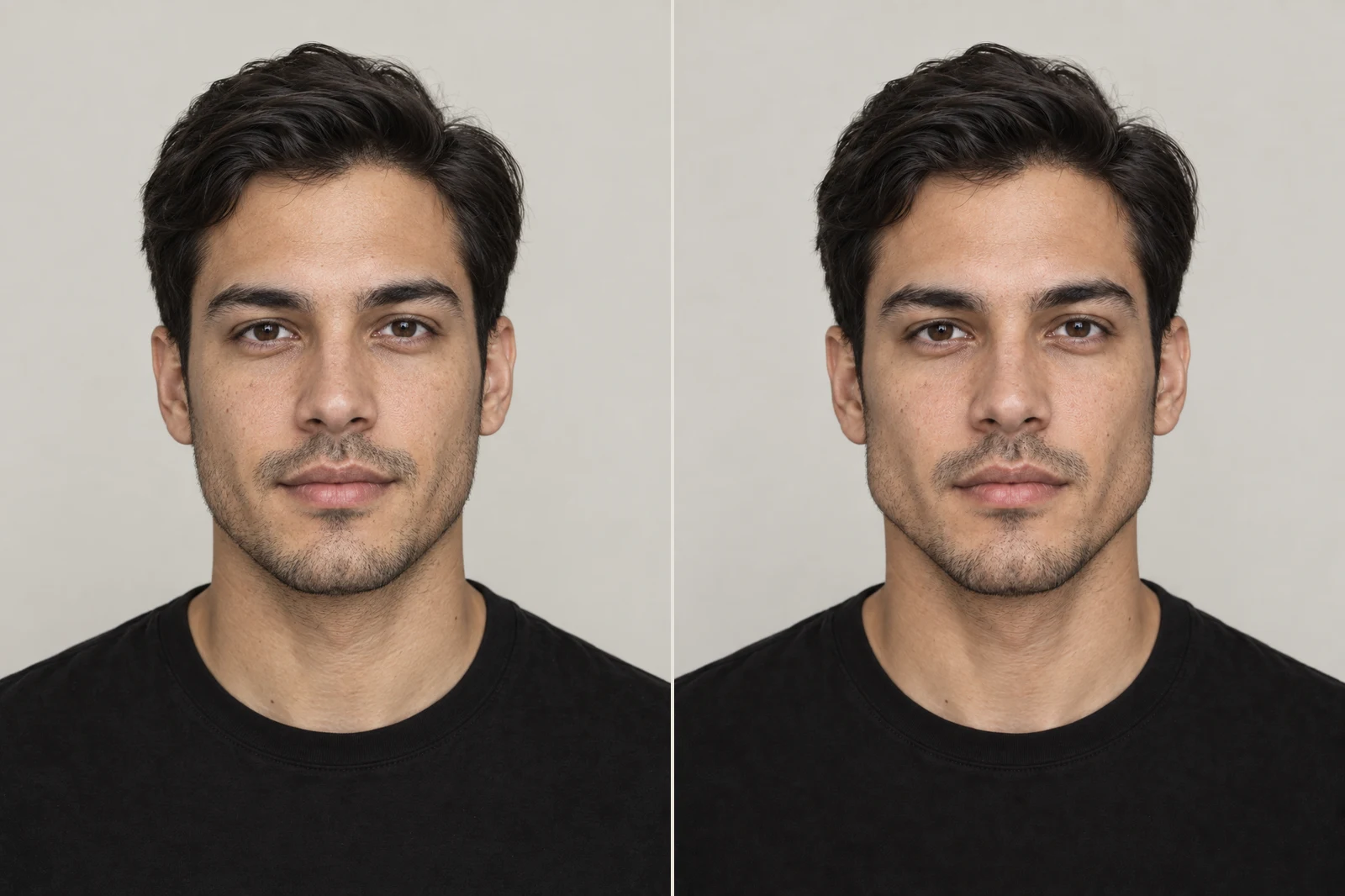
- Symmetry index: 95 to 96 (+1)
- Chin ÷ philtrum: 3.01 to 3.07 (+0.06)
- Palpebral fissure (eye width ÷ height): 3.36 to 3.29 (−0.07)
Jaw angle at the chin went from 114.3° to 114.7°. Jaw width ÷ face width went from 0.81 to 0.82. Both are inside the noise. The chin-to-philtrum ratio picked up a little because the chin came forward and down, and the eyes narrowed a hair with the effort.
Verdict: moves the chin 0.06 of a philtrum, moves nothing in the jaw. A clench is felt in the face and seen from the side; a front-on landmark tool is not looking at the masseter.
The slight smile
The claim is that widening the lips makes the nose look smaller by comparison. The tools agree with the first half and not the second.
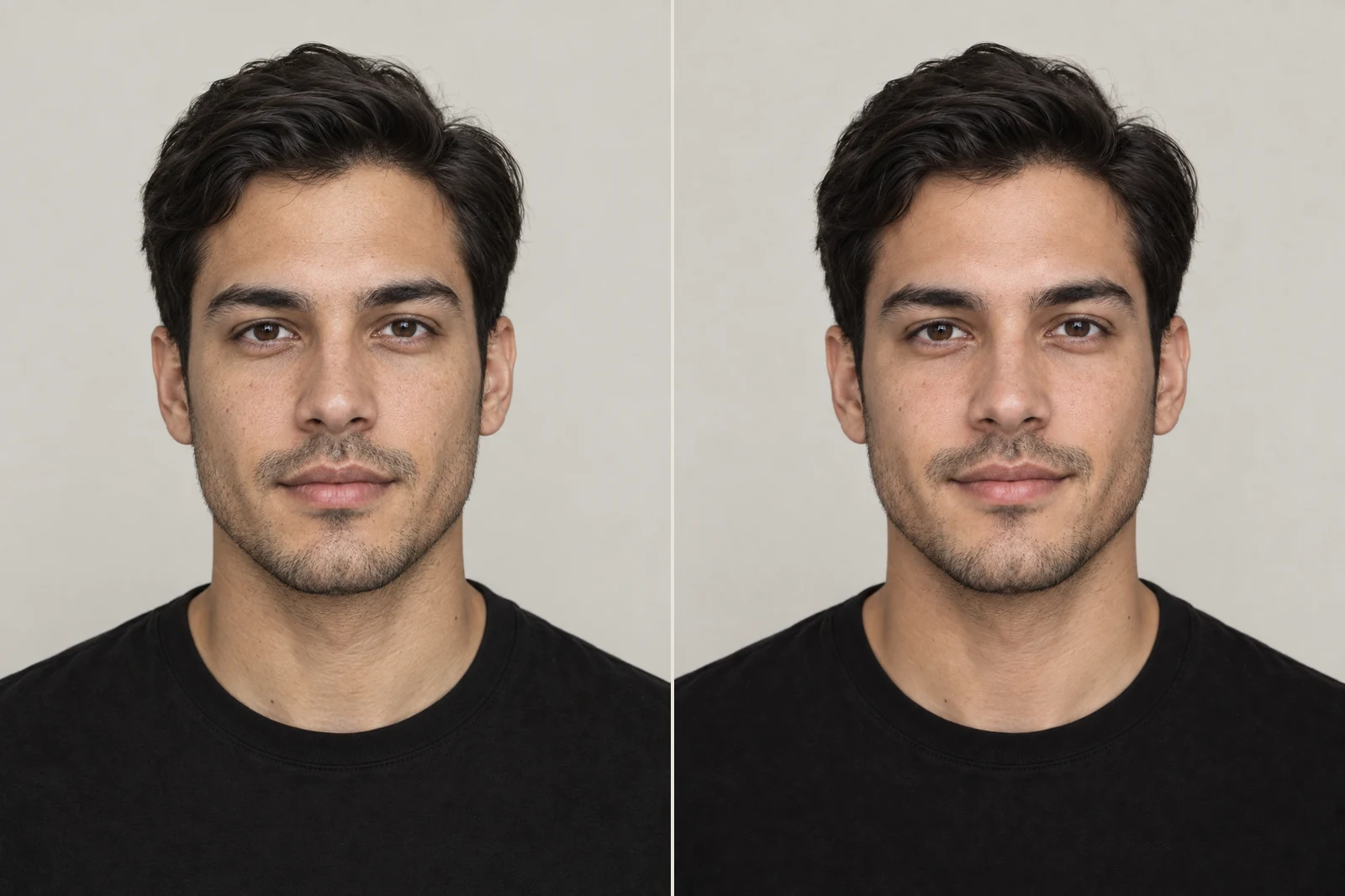
- Symmetry index: 95 to 96 (+1)
- Mouth width ÷ nose width: 1.38 to 1.42 (+0.04)
- Lower lip ÷ upper lip height: 1.59 to 1.66 (+0.07)
- Chin ÷ philtrum: 3.01 to 3.14 (+0.13)
Nose width ÷ cheekbone width went from 0.28 to 0.27, a hundredth. What actually moved is the mouth: wider by 4% of nose width, and the lower lip thicker relative to the upper lip as the smile stretched it.
Verdict: moves the mouth ratio 0.04 toward the forum ideal of 1.5, moves the nose by nothing the tools can read. The nose does not get smaller. The mouth gets bigger, and the ratio credits the nose.
Pursed lips
Same claim, opposite gesture: purse the lips to make the nose read smaller. It moves the same ratio the other way.
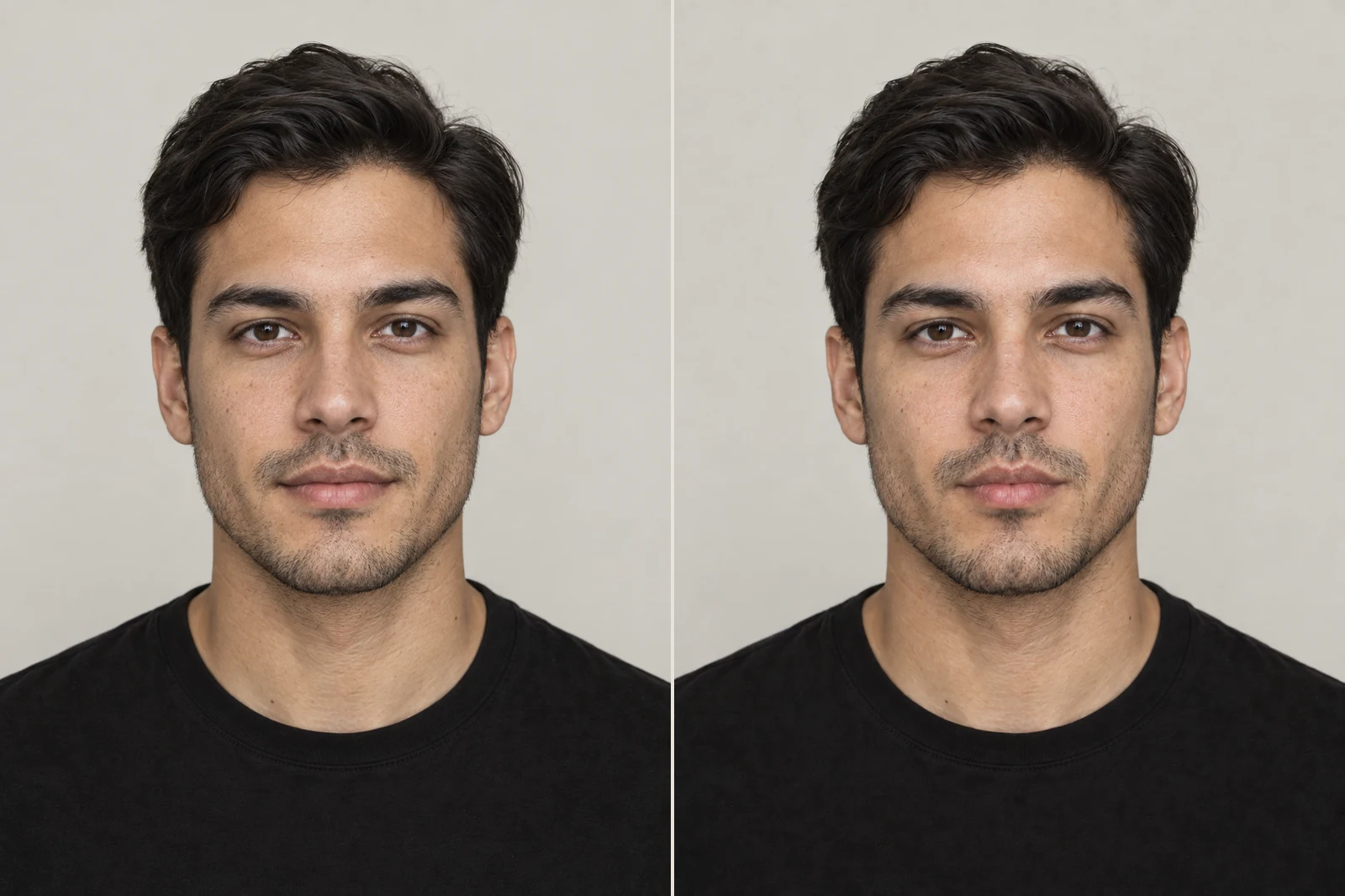
- Symmetry index: 95 to 97 (+2)
- Mouth width ÷ nose width: 1.38 to 1.28 (−0.10)
- Palpebral fissure: 3.36 to 3.31 (−0.05)
Nose width stayed at 0.27 to 0.28 of cheekbone width. Pursing narrows the mouth, so the mouth-to-nose ratio drops by a tenth and lands further from the forum's 1.5 to 1.62 band than the resting photo did.
Verdict: moves mouth ÷ nose 0.10 in the wrong direction, moves the nose not at all. The two lip tricks in the thread cancel each other, and only one of them helps the number.
Chin down, camera high
"Camera just above eye level, chin forward and slightly down." Every anglemaxxing checklist has this one, and it is the trick that moves the most readings, in both directions.
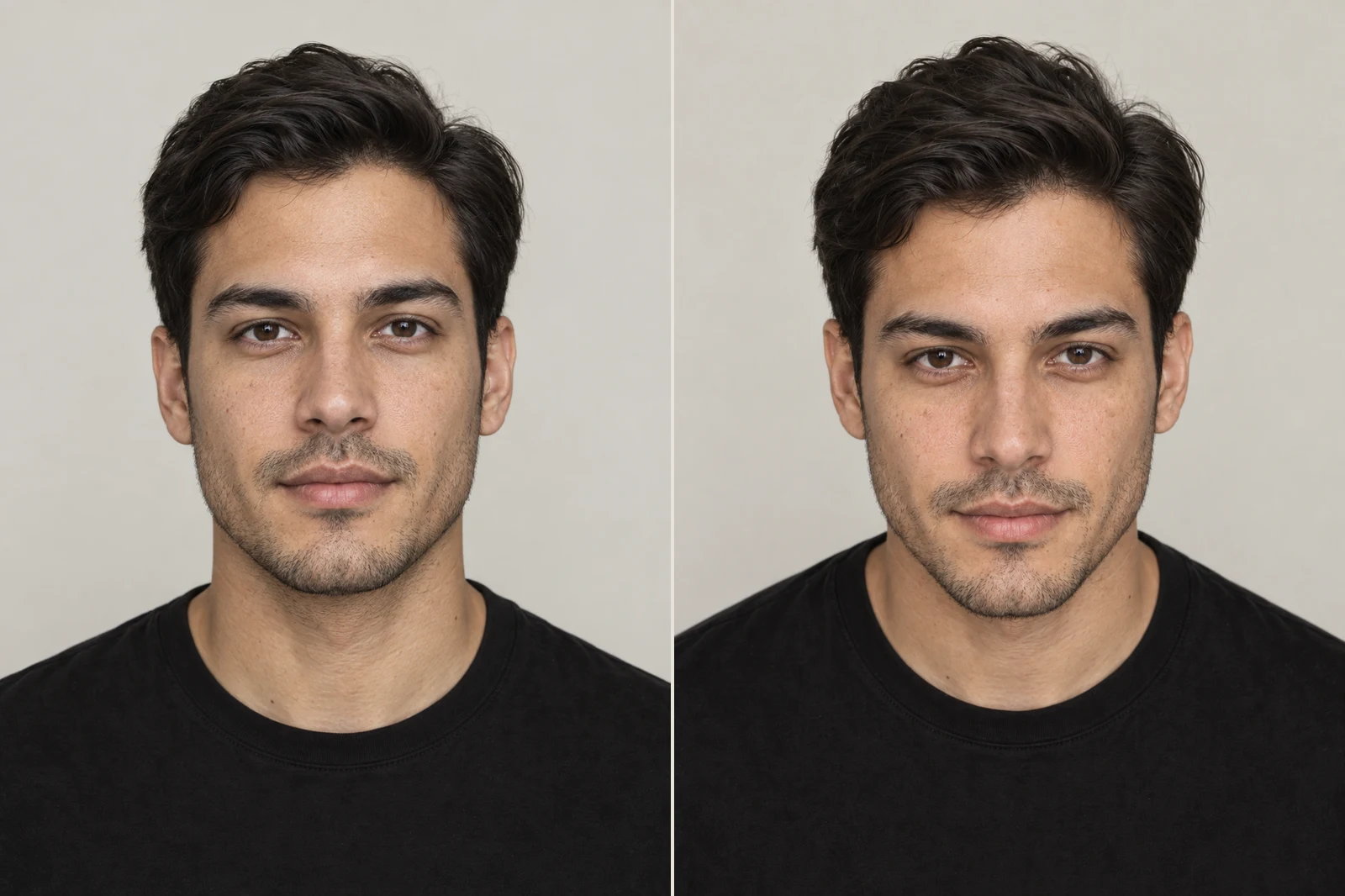
- Symmetry index: 95 to 97 (+2)
- Eye width difference: 0.3% to 1.4% (+1.1 points, now photo-left wider)
- Jaw angle at the chin: 114.3° to 104.4° (−9.9°)
- fWHR: 2.02 to 1.90 (−0.12)
- Midface ratio: 0.98 to 0.91 (−0.07)
- EME angle: 47.5° to 45.8° (−1.7°)
- Lower lip ÷ upper lip height: 1.59 to 2.02 (+0.43)
- Chin ÷ philtrum: 3.01 to 2.92 (−0.09)
- Eyebrow tilt: −7.1° to −2.1° (+5.0°)
- Average canthal tilt: +3.3° to +5.6° (+2.3°)
The jawline tool's headline went from "Defined jaw" to "Sharp, narrow jaw", which is exactly what the thread promises. Canthal tilt gained 2.3° and eyebrow tilt gained 5°, because dipping the chin foreshortens the lower face and lifts the outer corners of everything relative to the inner corners. That is the hunter-eyes trick nobody names: a head tilt.
Then the bill. fWHR dropped 0.12 and the midface ratio 0.07, because the face got taller in the frame relative to its width. The upper lip nearly vanished, so lower ÷ upper lip jumped from 1.59 to 2.02. The facial ratios tool went from 8 of 12 inside the forum bands to 5 of 12.
Verdict: moves the jaw angle 10° and the canthal tilt 2.3°, moves fWHR 0.12 the wrong way, and knocks three ratios out of band. It is the strongest trick on the list and the most expensive.
Squinting
The thread's fix for upper eyelid exposure: squint. Glue and tape are also offered; squinting is the free one.
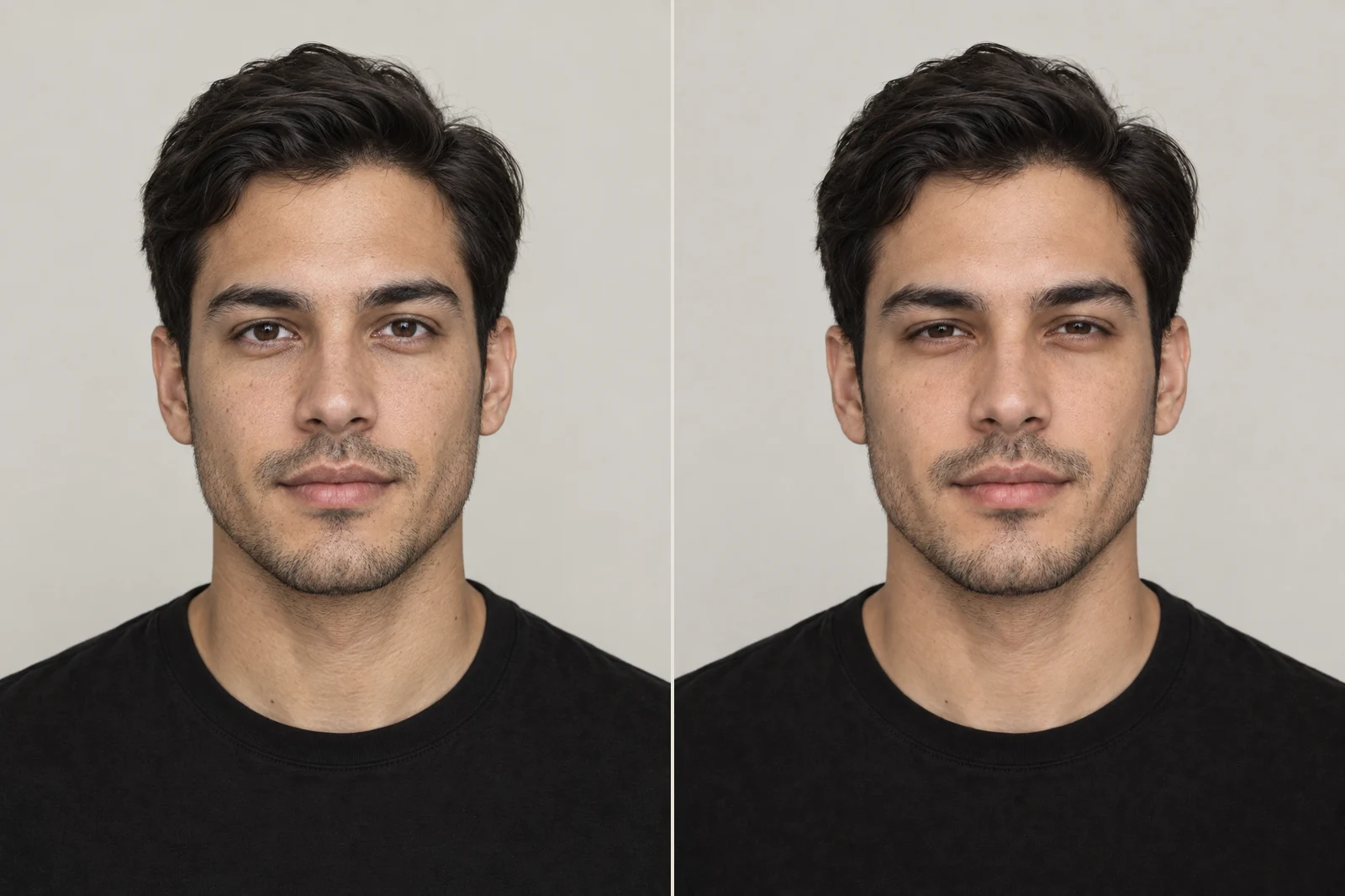
- Palpebral fissure (eye width ÷ height): 3.36 to 4.35 (+0.99)
That is the entire list. Eye width difference went from 0.3% to 1.2%, just under our 1-point line, and average canthal tilt went from +3.3° to +2.7°, just under a degree. The ratios headline slipped from 8 of 12 in band to 6 of 12, because the fissure ratio left the forum's 3.0 to 3.5 window on the high side.
Verdict: moves the eye aperture ratio a full point, moves the tilt 0.6° the wrong way. The squint hides the lid and reads as a narrower eye, but it does not make the corners tilt up; on this face the tilt reading went down.
Brows taped up
The thread's tape tricks pull in both directions: tape hidden under the hair to pull the brows down over an exposed lid, and lift tape to pull the cheeks up. We taped the brows up, about 3 mm, and left the forehead alone.
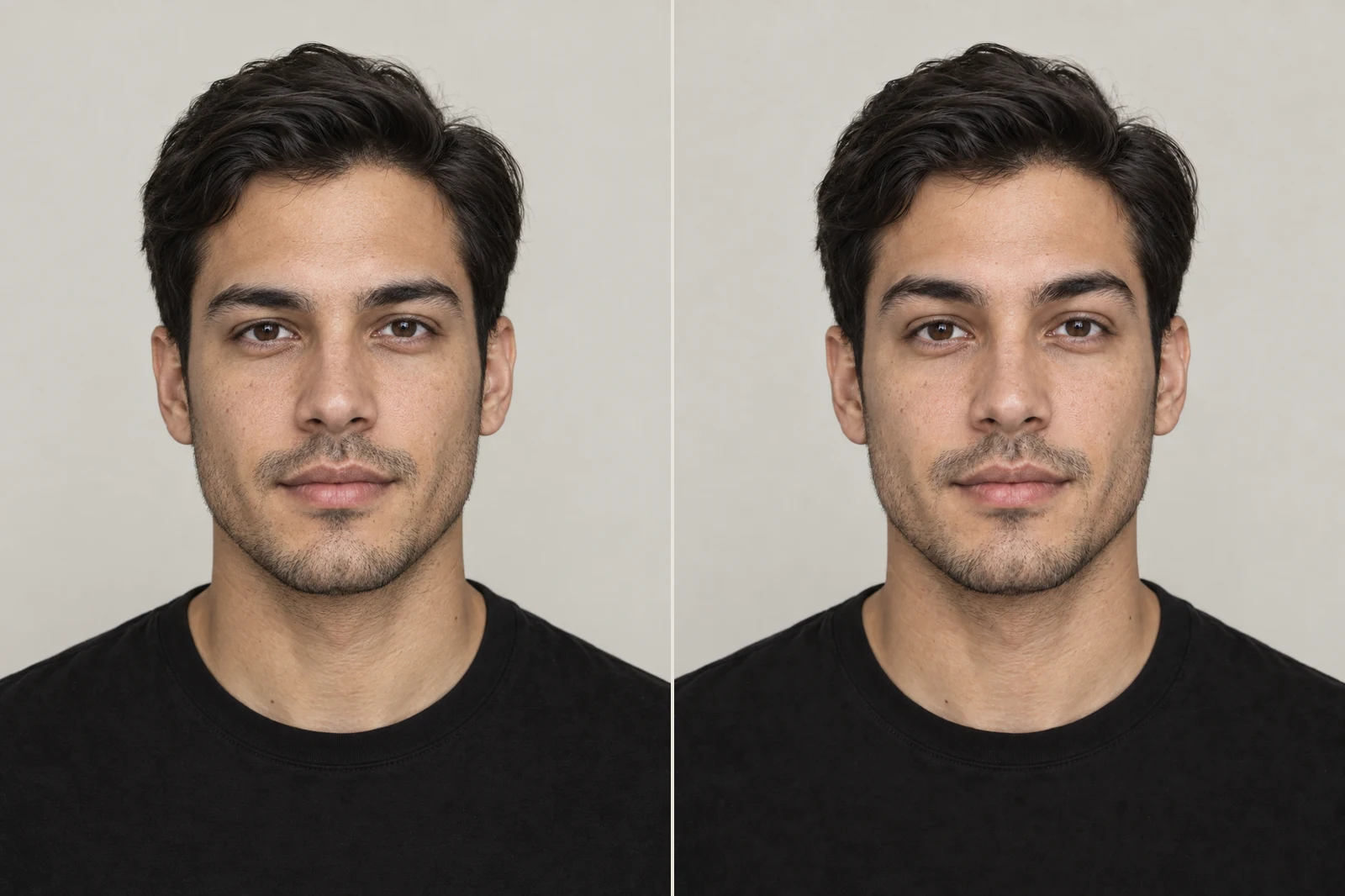
- Jaw angle at the chin: 114.3° to 115.3° (+1.0°)
- Chin ÷ philtrum: 3.01 to 2.90 (−0.11)
- Eyebrow tilt: −7.1° to −8.8° (−1.7°)
Nothing in the eye readings moved. The canthal tilt stayed at +3.3° to +3.4°, and the fissure ratio moved 0.04. The eyebrow tilt got worse by 1.7°, because a straight lift raises the inner brow as much as the outer, and the forum wants the outer end higher. The 1° on the jaw angle and the chin ratio are the lower face re-rendering, not the brows.
Verdict: moves brow tilt 1.7° the wrong way, moves the eyes by nothing. Tape that lifts everything evenly changes brow height, which none of these tools score, and not brow tilt, which one of them does.
Best-side, three-quarter turn
"Three-quarter turn beats full frontal." For a portrait, probably. For a measurement, the turn is the largest single number in this article.
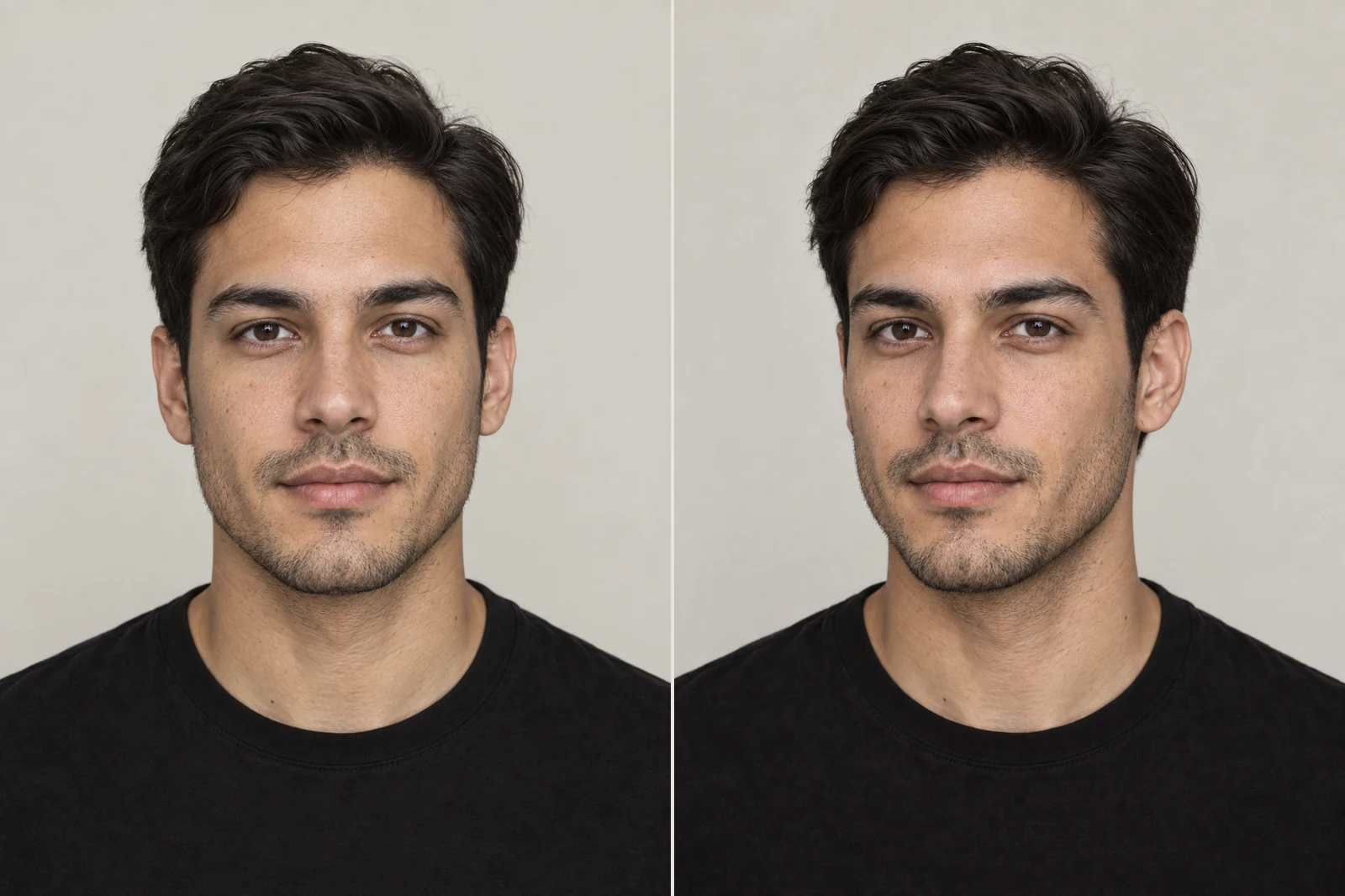
- Symmetry index: 95 to 67 (−28), headline from "Typically symmetrical" to "Noticeable asymmetry"
- Nose tip offset: 0.3% to 4.2% (+3.9 points)
- Eye width difference: 0.3% to 10.4% (+10.1 points)
- Jaw angle at the chin: 114.3° to 110.2° (−4.1°)
- fWHR: 2.02 to 1.96 (−0.06)
- Lower lip ÷ upper lip height: 1.59 to 1.70 (+0.11)
- Chin ÷ philtrum: 3.01 to 3.11 (+0.10)
- Facial fifths, eye share: 99 to 104 (+5 points)
- Eyebrow tilt: −7.1° to −5.9° (+1.2°)
- Canthal tilt, photo-left eye: +3.2° to +4.4° (+1.2°); side difference 0.3° to 1.6°
The face detector accepted the photo without complaint, which is the dangerous part. The symmetry tool then reported that one eye is 10% wider than the other and the nose sits 4% off centre. Both are true of the image and false of the face. The jaw angle sharpened 4° for the same reason the chin-down photo did: the outline changed, the bone did not.
Verdict: moves the jaw angle 4° in the trick's favour and the symmetry index 28 points against it. A 20° turn passes detection and fails every left-right reading.
The beard line
The guide also says to trim the beard edge to a hard line under the jaw. We did not photograph it: it is a razor rather than a pose, and none of these tools read hair. The jawline reading comes from landmarks at the jaw corners and chin, which sit where the bone is whether the stubble ends in a line or a fade. The line is for eyes.
What this means for your own photos
Every one of these tricks is a pose or an angle, and the tools measured the pose or the angle. That is not a flaw in the tools; it is what a photo is. A jaw angle of 104° and a jaw angle of 114° were the same jaw seven minutes apart.
So if you compare two photos of yourself, the only comparison that means anything is one taken the same way: same distance, same camera height, chin level, eyes on the lens, mouth closed and at rest, no clench. Change any one of those and you are no longer measuring your face against your face. You are measuring the trick.
That cuts both ways. A bad selfie can hand you a 67 symmetry score you do not deserve, and a good one a canthal tilt you did not earn. It also means the readings are more repeatable than they look if you hold the setup still. Take the photo the boring way, take it again next month the same boring way, and the difference is you.
Try it on your own resting photo: facial ratios, jawline, face symmetry. Then take the chin-down one and watch what moves.