
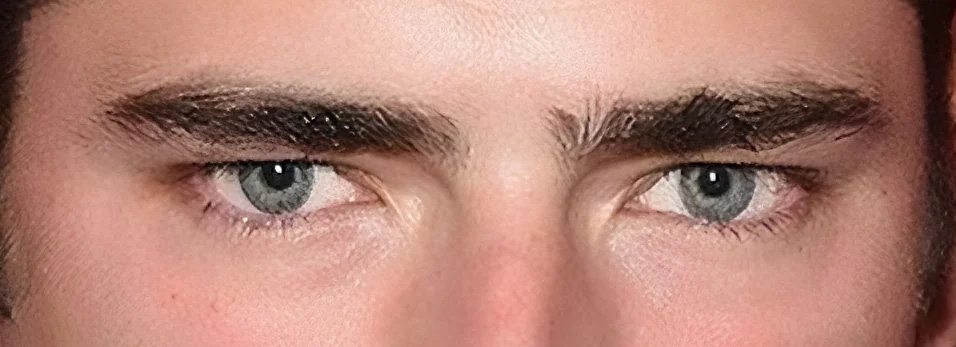
Short answer: hunter eyes have a positive canthal tilt (the outer corner sits higher than the inner one), a narrow vertical opening, and a brow that sits close to the eye, which makes the upper lid look hooded. Prey eyes are the opposite on all three: a neutral or negative tilt, a rounder opening, more visible upper eyelid. Most people are a mix. See both side by side, with the numbers, on our hunter eyes vs prey eyes page, or measure all three on your own photo in about 20 seconds.
Measure yours · freeHunter Eyes TestTilt, aperture and brow distance, measured not rated. About 30 seconds from one photo.Try it →In the ever-evolving world of beauty trends, few features have captured our collective attention quite like "hunter eyes." It may be more than a fleeting social media obsession. With huge view counts on TikTok, hunter eyes have become a popular shorthand for an intense, captivating gaze that exudes confidence and allure.
What Exactly Are Hunter Eyes?
Hunter eyes represent a specific eye shape characterized by several key features that work together to create an unmistakably striking appearance. Think of celebrities like Chris Hemsworth, David Gandy, or model Sean O'Pry—their eyes possess that penetrating, almost predatory intensity that makes you stop and take notice.
The defining characteristics include:
Deep-Set Positioning: These eyes sit further back in the skull, creating natural shadowing that adds depth and mystery to the gaze.
Positive Canthal Tilt: The outer corners of the eyes are positioned higher than the inner corners, creating an upward slant that suggests alertness and confidence.
Almond Shape: The elongated, narrow appearance gives these eyes their signature sleek silhouette.
Hooded or Tight Eyelids: Less visible eyelid space creates that coveted "bedroom eyes" effect.
Strong Under-Eye Support: Robust bone structure beneath the eyes provides definition and prevents the tired, hollow look.
The Hunter vs. Prey Eye Distinction
The looksmaxxing community coined this terminology to differentiate between two primary eye shapes, and while the names might sound dramatic, they represent very real aesthetic preferences that have shaped beauty standards.
Hunter Eyes embody strength, focus, and intensity. They're associated with leadership qualities and a commanding presence—think of the piercing gaze of a fashion model on a runway.
Prey Eyes, on the other hand, are characterized by their rounder, more prominent appearance. They tend to look softer and more approachable—even beloved celebrities like Timothée Chalamet are often placed in this category by online commentators.
Neither eye shape is inherently superior, but hunter eyes have gained particular attention for their association with conventional attractiveness and perceived strength.
The Science Behind the Appeal
Why do hunter eyes hold such magnetic appeal? Part of it is measurable: in one experiment, female faces edited to accentuate canthal tilt were preferred 93% of the time, and a study of composite faces found attractive Caucasian and African faces had a steeper eye slant and lower brows than average ones (attractive Asian faces had a less steep slant). Evolutionary explanations are often offered, but they are speculative. The positive canthal tilt and deep-set positioning may also accentuate other features like high cheekbones and a strong jawline.
The almond shape and natural shadowing provide depth that draws people in, creating what some describe as "facial magnetism"—that indefinable quality that makes someone's face memorable and compelling.
Enhancing Your Natural Eye Shape
While genetics primarily determine your eye shape, there are numerous ways to enhance and work with your natural features, regardless of whether you have hunter eyes, prey eyes, or something in between.
Makeup Magic
For Those Seeking the Hunter Eye Effect:
Master the Wing: Use a sharp, elongated winged eyeliner that extends beyond your natural eye shape, lifting the outer corner to create that positive canthal tilt effect.
Embrace Dark Drama: Apply darker eyeshadows in the crease and outer corners to enhance the appearance of depth. Think rich browns, deep grays, or dramatic blacks.
Contour the Crease: Use matte eyeshadows to create artificial depth, making your eyes appear more recessed and mysterious.
Bold Lashes on the Outer Edge: Concentrate mascara or false lashes on the outer corners to emphasize the upward tilt.
Highlight Strategically: A touch of highlighter on the inner corners and just beneath the brow bone can make your eyes appear more deep-set.
Skincare and Maintenance
The skin around your eyes plays a crucial role in how your eye shape appears. Healthy, well-maintained skin can dramatically enhance your natural features.
Essential Eye Care Steps:
- Use a gentle, hydrating eye cream with ingredients like hyaluronic acid to plump and firm the delicate skin
- Incorporate retinol products, which in a controlled trial reduced fine wrinkles and increased collagen production
- Always wear SPF: in a randomised trial, daily sunscreen users showed 24% less skin aging over 4.5 years
- Consider treatments that reduce puffiness and dark circles to let your natural eye shape shine
Lifestyle Factors
Your daily habits significantly impact how your eyes appear:
Posture Matters: Poor posture may make the face look more tired in photos, although this has not been studied directly. Holding your head level keeps your features in a flattering position for the camera.
Sleep Quality: After sleep deprivation, faces are rated as having more hanging eyelids, more swollen eyes and darker circles, so adequate rest helps your natural eye shape show.
Hydration: Well-moisturised skin can look smoother, although drinking more water has not been shown to change how your eyes look.
The Cultural Phenomenon
The hunter eyes trend represents more than just aesthetic preference—it reflects our changing beauty standards and the power of social media to influence our perceptions of attractiveness. What's particularly interesting is how this trend has democratized beauty discussions, allowing people to analyze and understand facial features in ways that were once limited to professionals.
However, it's important to note that this trend has also sparked conversations about beauty standards and self-acceptance. While hunter eyes are undeniably striking, beauty comes in countless forms, and the most attractive feature anyone can possess is confidence in their natural appearance.
Professional Enhancement Options
For those considering more permanent changes, the beauty industry offers various professional treatments:
Non-Invasive Options:
- Botox treatments to subtly adjust the eye area
- Dermal fillers to enhance under-eye support
- Professional makeup consultations for personalized techniques
Surgical Considerations:
- Blepharoplasty to adjust eyelid appearance
- Canthoplasty to alter canthal tilt
- Fat grafting for enhanced depth and definition
It's crucial to consult with qualified professionals and carefully consider the risks and benefits of any cosmetic procedure.
Celebrating Your Unique Beauty
While understanding and appreciating different eye shapes can be fun and educational, it's essential to remember that beauty is incredibly diverse. The hunter eyes trend shouldn't make anyone feel inadequate about their natural features. Instead, use this knowledge to better understand how to enhance and celebrate your unique characteristics.
Whether you have naturally striking hunter eyes, soft and approachable prey eyes, or any variation in between, the key to true beauty lies in understanding your features and knowing how to make them work for you.
The Bottom Line
Hunter eyes represent a fascinating intersection of genetics, cultural preference, and social media influence. While they're undeniably captivating, they're just one expression of eye beauty among many. The real magic happens when you learn to work with your natural features, using makeup, skincare, and confidence to create your own signature look.
Remember: trends come and go, but the confidence that comes from understanding and embracing your unique beauty is timeless. Whether you're team hunter eyes or celebrating another eye shape entirely, the most important thing is feeling comfortable and confident in your own skin.
The next time you're getting ready and looking in the mirror, take a moment to appreciate your eye shape for what it is—a unique feature that contributes to your individual beauty story.
Sources
- Bashour M, Geist C. Is medial canthal tilt a powerful cue for facial attractiveness? Ophthalmic Plastic and Reconstructive Surgery, 2007. PubMed 17237692 — female faces edited to accentuate canthal tilt were preferred over the originals 93% of the time.
- Rhee SC, Woo KS, Kwon B. Biometric study of eyelid shape and dimensions of different races with references to beauty. Aesthetic Plastic Surgery, 2012. PubMed 22810555 — composite-face measurements; attractive Caucasian and African faces had a steeper eye slant and narrower eye opening than average ones, while attractive Asian faces had a less steep slant, and attractive faces of all groups had lower brows.
- Sundelin T, Lekander M, Kecklund G, et al. Cues of fatigue: effects of sleep deprivation on facial appearance. Sleep, 2013. PubMed 23997369 — after sleep deprivation, faces were rated as having more hanging eyelids, more swollen eyes and darker circles under the eyes.
- Kafi R, Kwak HS, Schumacher WE, et al. Improvement of naturally aged skin with vitamin A (retinol). Archives of Dermatology, 2007. PubMed 17515510 — randomised, vehicle-controlled trial; 24 weeks of topical retinol reduced fine wrinkles and increased procollagen.
- Hughes MC, Williams GM, Baker P, et al. Sunscreen and prevention of skin aging: a randomized trial. Annals of Internal Medicine, 2013. PubMed 23732711 — daily sunscreen users showed 24% less skin aging over 4.5 years than discretionary users.