
Free sanpaku eyes test · runs in your browser
Sanpaku Eyes Test
Do I have sanpaku eyes? Sanpaku means "three whites": the white of the eye shows on three sides of the iris, left, right and underneath (or, more rarely, above). Guessing in the mirror is hard because your eyes move the moment you look at them. Upload one straight-on photo and this test measures the white below and above each iris, in millimetres, and gives you a straight answer: none, slight or sanpaku.
Drop a photo, paste one, or choose a file
Straight-on, whole face visible, even light. JPG, PNG or WebP.

Runs in your browser. Your photo never leaves your device.
NewSymmi Lab · full face analysis
Your eyes are one reading. Your face has 30.
Your eyes, brows and lashes read in full, the haircut and brow shape that make them stand out, plus your score, your colours and your plan.
- Your face score and where you rank
- 4 haircuts tried on your own face
- Your colours, shades and a step-by-step plan
$6.99 once · no subscription · ready in minutes
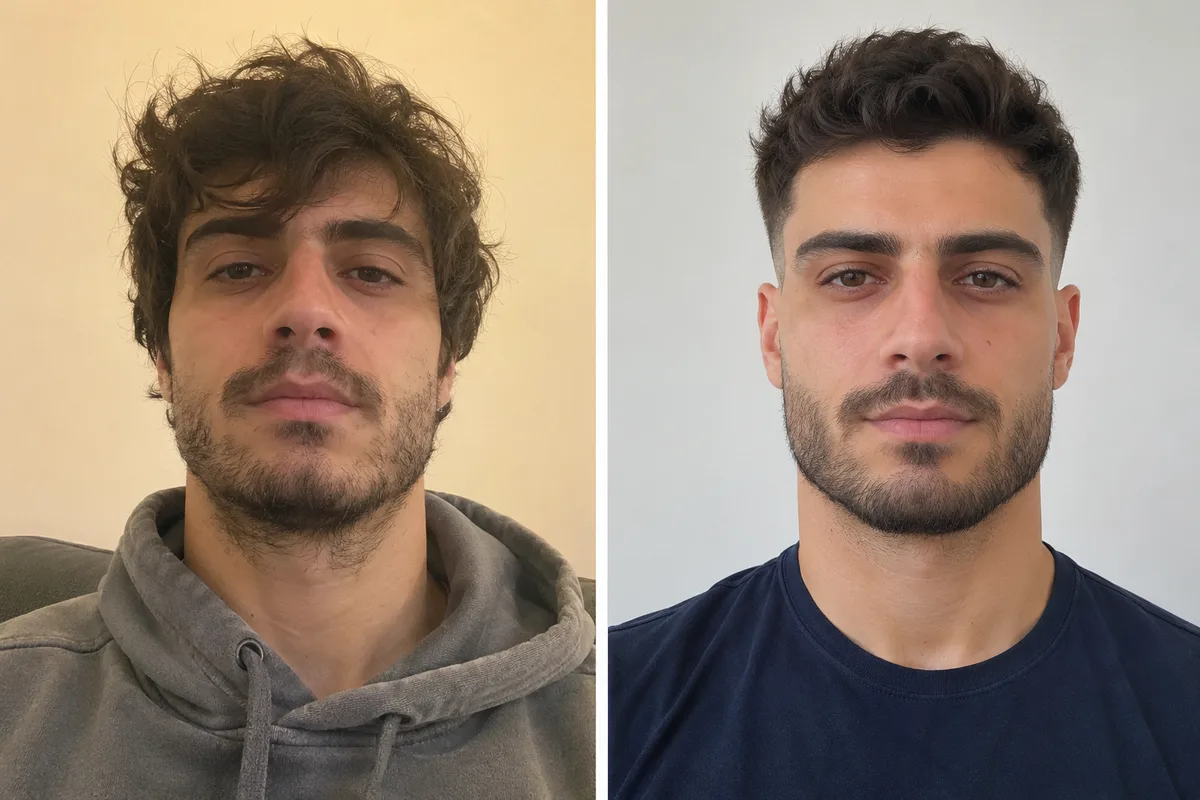
Sample result
How it is measured
The white under your iris, counted on your own photo.
The face model finds each iris and its size. The tool then reads the pixels straight below and above the iris and counts how far the white of the eye runs before it meets the lid, on several lines per eye. That distance is divided by the height of the iris, and turned into millimetres using the iris itself as the ruler (an adult iris is about 11.7 mm across). Under 5% of the iris height reads as none, 5% to 12% as slight, and 12% or more as sanpaku. White above the iris counts from 3%.
- White below the iris
- The main reading: the band of white between the bottom of the iris and the lower lid, as a share of iris height and in millimetres.
- Left eye and right eye
- Each eye on its own. Many people show white under one eye only.
- White above the iris
- The rarer kind (yang sanpaku). The upper lid normally covers the top of the iris, so any white here stands out.
- Lower lid position
- Whether the lower lid sits at the iris edge, covers a little of it, or rests below it.
- Canthal tilt
- A downward tilt of the outer corner often comes with a lower outer lid and more white showing.
Measure it yourself
How to check for sanpaku eyes yourself
You can do the same check in a mirror or on a photo:
- 1Hold the camera or mirror at eye level. Chin level, head straight, eyes relaxed and looking directly ahead.
- 2Look at one iris (the coloured ring). White to its left and right is normal for everyone.
- 3Now look under the iris. If the lower lid touches the iris, you do not have sanpaku eyes.
- 4If you can see a band of white between the iris and the lower lid, that is sanpaku (yin sanpaku). A hair-thin line is the slight kind.
- 5White above the iris, between it and the upper lid, is the rarer yang sanpaku.
- 6Or upload a photo above and the tool measures the band for you.
Skip the ruler: the free tool above does it from one photo in about 30 seconds ↑
What's normal
What your result means
- Under 5% of iris height
- Reads as: No sanpaku eyes
- Note: The lower lid meets or slightly covers the iris. The most common result.
- 5% – 12%
- Reads as: Slight sanpaku
- Note: A thin line of white. Most people will not notice it, and it often comes and goes with the camera angle.
- 12% and over
- Reads as: Sanpaku eyes
- Note: A clear band of white under the iris: the look the word is used for.
White above the iris (3% or more) is reported separately as yang sanpaku. A lowered chin, looking up at the lens or a phone held below your face all add white under the iris, so retake at eye level before you trust a sanpaku result.
Sources
What this is based on.
The measurement and its reference ranges come from published research. Studies use different methods and populations, so compare your number with the range shown on this page rather than with other tools.
- 1.
Rüfer F, Schröder A, Erb C (2005). White-to-white corneal diameter: normal values in healthy humans obtained with the Orbscan II topography system. Cornea. PubMed 15778595
Corneal diameter averaged 11.71 mm in adults: the ruler behind the millimetre readings of the white under the iris.
- 2.
Rhee SC, Woo KS, Kwon B (2012). Biometric study of eyelid shape and dimensions of different races with references to beauty. Aesthetic Plastic Surgery. PubMed 22810555
Eyelid position and exposure of the eye compared across ethnic groups; what counts as usual differs by population.
- 3.
Kartynnik Y, Ablavatski A, Grishchenko I, Grundmann M (2019). Real-time facial surface geometry from monocular video on mobile GPUs. arXiv. arXiv:1907.06724
The face-mesh model that places the 468 surface landmarks this tool measures from.
- 4.
Ablavatski A, Vakunov A, Grishchenko I, et al. (2020). Real-time pupil tracking from monocular video for digital puppetry. arXiv. arXiv:2006.11341
The iris model that adds 10 eye landmarks (478 in total), used for pupil-based reference lines.
Our own data: how much each reading moves when the same face is photographed again is published on the methodology page. How we choose sources.
Related tools
Eye Area Rating
One score for your whole eye area.
Canthal Tilt Test
Are your outer eye corners tilted up or down?
Hunter Eyes Test
Tilt, opening and brow position checked.
Eye Shape Detector
Almond, round, upturned or downturned.
Canthal Tilt Filter
See your eyes with a different tilt.
Face Symmetry Test
How well your two sides match.
PSL Score Test
A measured 1–8 PSL rating with your tier.
FAQ
Do I have sanpaku eyes?+
Look straight ahead with your chin level. If white shows between the bottom of your iris and your lower lid, yes. Upload a straight-on photo above and the test measures that band on each eye and tells you none, slight or sanpaku.
What are sanpaku eyes?+
Sanpaku is Japanese for "three whites". Most eyes show white on two sides of the iris, left and right. In sanpaku eyes a third side shows too: usually below the iris (yin sanpaku), sometimes above it (yang sanpaku).
Are sanpaku eyes rare?+
Clear sanpaku in a relaxed, straight-on photo is uncommon. A thin line of white under one or both irises is much more common, and plenty of people show it only in some photos, because the angle of the head changes it.
Are sanpaku eyes bad luck or dangerous?+
The bad-luck idea comes from old face reading and has no evidence behind it. It is simply how the lids sit around the eye. If white started showing recently, or your eyes look more prominent than they used to, that is a reason to see an eye doctor rather than a face-reading chart.
Are sanpaku eyes attractive?+
It depends on the face. White under the iris can give a dreamy, heavy-lidded or intense look that many well-known faces are remembered for. In looksmax circles a lower lid that sits tight against the iris is rated higher, which is why it is one of the readings in the eye area rating.
Why does the result change between photos?+
Because the white under the iris depends on where you are looking and how your head is tilted. Chin down, eyes up, or a phone held low all expose more white. Use a photo taken at eye level with your head straight.
Can you fix sanpaku eyes?+
The camera angle and where you look change it the most in photos. Makeup can hide a thin line (a darker lower lash line). The lid position itself only changes with a procedure, which is a conversation for a qualified surgeon, not a web tool.
Is my photo uploaded?+
No. Everything runs in your browser.
One reading here.
Nineteen in the app.
A controlled scan, every reading against its ideal band, bone vs trainable, a plan, and a 3D model on Face ID iPhones.
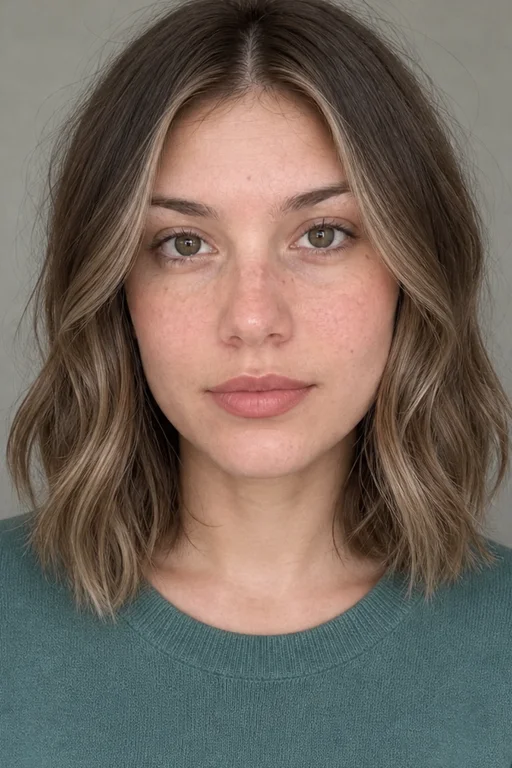
Symmi Lab · new
Your full face analysis, with 4 haircuts on your own face.