
Free forehead test · runs in your browser
Is My Forehead Big?
Stop guessing in the mirror. Upload one straight-on selfie and your forehead is measured as a share of your face height, from hairline to brows, and compared with the balanced range. You see your upper, middle and lower thirds drawn on your face, so you know if your forehead is big, average or short, and what balances it.
Drop a photo, paste one, or choose a file
Straight-on, whole face visible, even light. JPG, PNG or WebP.
Runs in your browser. Your photo never leaves your device.
NewSymmi Lab · full face analysis
See your whole face, not one number.
Your face score and rank, 30 modules measured on your photo, 4 haircuts on your own face, your exact colours and a step-by-step glow-up plan.
- Your face score and where you rank
- 4 haircuts tried on your own face
- Your colours, shades and a step-by-step plan
$9.99 once · no subscription · ready in minutes
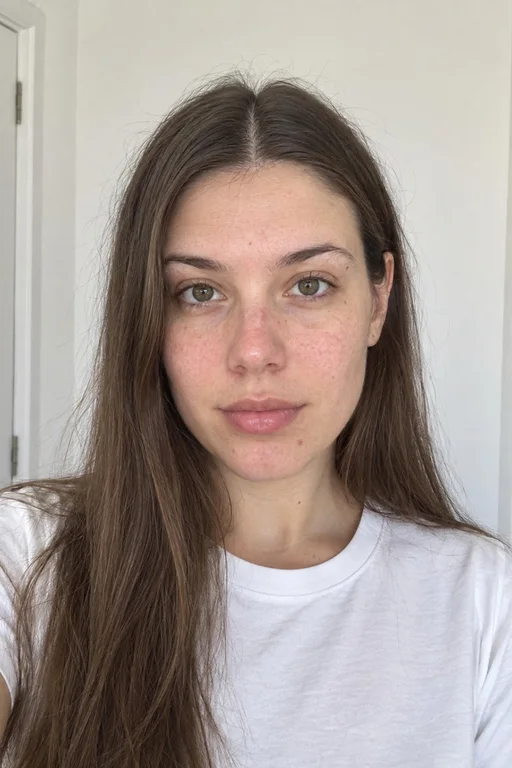
Your photo
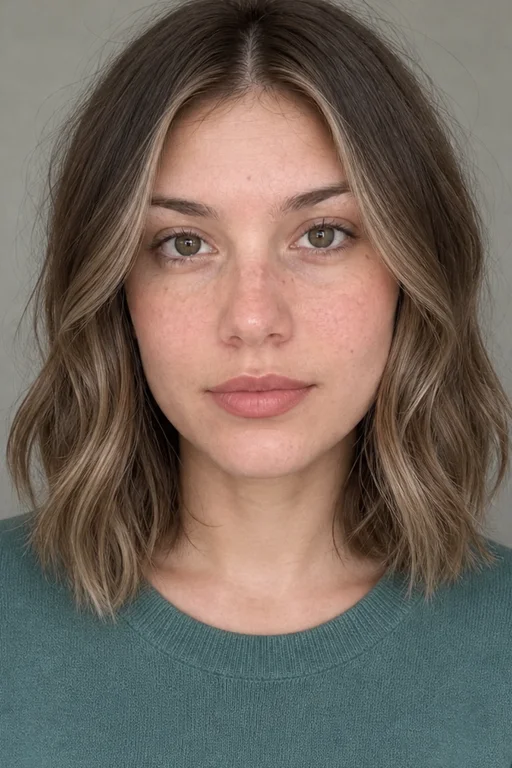
Your best look
Sample result
How it is measured
Forehead size is a proportion
A forehead isn't big in centimetres; it is big for your face. Faces are read in thirds: hairline to brows (your forehead), brows to the base of the nose, and nose to chin. The tool finds 478 points on your face, estimates where your hair starts, and measures each third as a percentage of the whole face. A forehead of about 30 to 36 percent is balanced; above that it reads as big or tall.
- Upper third
- Your forehead: hairline to brows.
- Middle third
- Brows to the base of the nose.
- Lower third
- Nose to chin.
Measure it yourself
How to measure your forehead yourself
- 1Pull your hair back and look straight at the camera, eyes level.
- 2Measure from your hairline to the line between your brows, then brows to the bottom of the nose, then nose to chin.
- 3If the first measurement is clearly longer than the other two, your forehead is big for your face.
- 4Or upload a photo above and the tool does it in a second.
Skip the ruler: the free tool above does it from one photo in about 30 seconds ↑
What's normal
Forehead size by percentage
- Over 38%
- Forehead reads as: Big, tall forehead
- Styling that balances it: Curtain bangs or a full fringe, volume at the sides
- 36% – 38%
- Forehead reads as: Slightly big
- Styling that balances it: Side-swept bangs or a soft fringe
- 30% – 36%
- Forehead reads as: Balanced
- Styling that balances it: Anything works
- Under 30%
- Forehead reads as: Short forehead
- Styling that balances it: Hair off the face, height on top
The hairline is estimated from the forehead landmarks, so push hair back for the most accurate reading. A receding hairline makes the forehead read bigger.
Sources
What this is based on.
The measurement and its reference ranges come from published research. Studies use different methods and populations, so compare your number with the range shown on this page rather than with other tools.
- 1.
Farkas LG, Hreczko TA, Kolar JC, Munro IR (1985). Vertical and horizontal proportions of the face in young adult North American Caucasians: revision of neoclassical canons. Plastic and Reconstructive Surgery. PubMed 3883374
Measured the vertical thirds on real faces; equal thirds were the exception, not the rule.
- 2.
Farkas LG, Katic MJ, Forrest CR, et al. (2005). International anthropometric study of facial morphology in various ethnic groups/races. Journal of Craniofacial Surgery. PubMed 16077306
Facial proportions measured across ethnic groups; normal ranges vary by population.
- 3.
Al-Sebaei MO (2015). The validity of three neo-classical facial canons in young adults originating from the Arabian Peninsula. Head & Face Medicine. PubMed 25889948
Tested the neoclassical canons in another population and found most did not apply.
- 4.
Kartynnik Y, Ablavatski A, Grishchenko I, Grundmann M (2019). Real-time facial surface geometry from monocular video on mobile GPUs. arXiv. arXiv:1907.06724
The face-mesh model that places the 468 surface landmarks this tool measures from.
- 5.
Ablavatski A, Vakunov A, Grishchenko I, et al. (2020). Real-time pupil tracking from monocular video for digital puppetry. arXiv. arXiv:2006.11341
The iris model that adds 10 eye landmarks (478 in total), used for pupil-based reference lines.
Our own data: how much each reading moves when the same face is photographed again is published on the methodology page. How we choose sources.
Related tools
FAQ
Is my forehead big?+
Check your upper third. If your forehead, from hairline to brows, takes more than about 36 percent of your face height, it reads as big; 30 to 36 percent is balanced. Upload a straight-on selfie above to measure yours.
What is a normal forehead size?+
About a third of the face: roughly 30 to 36 percent of the height from hairline to chin. People often measure a forehead by width of four or five fingers, but the proportion to your own face is what decides how it looks.
What haircuts suit a big forehead?+
Curtain bangs, a full or side-swept fringe, and layers with volume at the sides all shorten a tall forehead. Avoid slicking hair straight back. The hairstyle finder shows cuts for your face shape.
Is a big forehead attractive?+
A big forehead is common and often linked to a youthful look. It reads most balanced when the other two thirds are in proportion, which is why the tool shows all three.
Is my photo uploaded?+
No. Everything runs in your browser and your photo never leaves your device.
One reading here.
Nineteen in the app.
A controlled scan, every reading against its ideal band, bone vs trainable, a plan, and a 3D model on Face ID iPhones.
Symmi Lab · new
Your full face analysis, with 4 haircuts on your own face.