
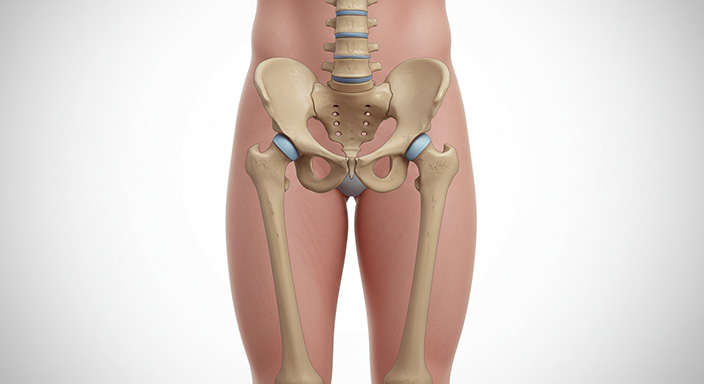
Short answer: a misaligned pelvis can contribute to facial asymmetry, but only the soft-tissue kind. When the pelvis tilts, the spine compensates, the head sits off-centre, and the jaw and neck muscles on one side work harder than the other. Over years that shows up as a lower mouth corner, a droopier brow or a fuller cheek on one side. It does not change bone: a nose that sits off-centre or a jaw that is longer on one side is structural, and no posture work will move it. If you want to know which kind you have, measure your face first; the readings tell you which features differ and by how much.
Measure yours · freeFace Symmetry TestSymmetry index plus eight left-right readings. About 30 seconds from one photo.Try it →You've tried every contouring trick in the book, mastered the art of strategic highlighting, and maybe even considered cosmetic procedures—but what if the secret to facial symmetry isn't found in your makeup bag or dermatologist's office? What if it's hiding in your pelvis?
Sounds wild, right? But it follows from a simple idea many posture specialists work from: your body is one interconnected system, and imbalances in one area may create visible changes elsewhere—including your face. That slight tilt in your pelvis could be one contributor to your uneven features, though the research on this exact chain is still limited.
Your Body's Beautiful (But Imperfect) Blueprint
Let's start with a reality check: perfect symmetry doesn't exist in nature, and that includes our faces. In fact, 3D studies of people with normal bites find small left-right differences on essentially every face, and about a third of patients at one jaw clinic had asymmetry visible to the eye. But when asymmetry becomes pronounced enough to affect your confidence or the way you photograph, it's worth understanding what might be driving it.
Here's where it gets interesting: your skeleton operates like a chain reaction. When your pelvis tilts to one side (called lateral pelvic tilt), your spine compensates by curving to maintain balance. Posture specialists propose that this compensation travels all the way up through your neck and into your skull, potentially affecting how your jaw sits and how your facial features align. That full chain has not been well studied, although people with scoliosis do show more facial asymmetry than people without it.
Think of your body like a beautiful vintage dress on a tilted hanger—no matter how gorgeous the fabric, if the foundation is off, the whole silhouette suffers.
The Science Behind the Symmetry
The proposed connection is anatomical. Your temporomandibular joint (TMJ), which controls jaw movement, sits at the end of the same postural chain, and reviews have linked head and neck posture with some jaw disorders (though not whole-body posture). When your pelvis shifts, the theory describes a domino effect:
The Chain Reaction:
- Pelvic tilt alters your spine's natural curve
- Spinal compensation changes your neck position
- Neck misalignment affects jaw positioning
- Jaw displacement influences facial symmetry
The Postural Restoration Institute, a physical-therapy training organisation, describes a common "Left AIC pattern"—where the left side of the pelvis rotates forward compared to the right. In its model this pattern is driven by our naturally asymmetric diaphragm and may contribute to facial changes over time; that model is a clinical framework rather than a tested finding.
Are You Showing the Signs?
Before you rush to a mirror in panic, remember that subtle asymmetry is completely normal and often adds character to our faces (hello, Cindy Crawford's iconic mole!). But if you're noticing pronounced changes, here are some signs that postural imbalances might be playing a role:
In Your Face:
- One eye appearing higher than the other
- Uneven cheekbone prominence
- Jaw that seems to favor one side
- Asymmetrical smile or lip line
- One side of your face appearing fuller or more angular
In Your Body:
- One hip sitting higher than the other
- Chronic neck or shoulder tension on one side
- Tendency to lean or shift weight to one leg
- Uneven shoulder height in photos
- Lower back discomfort that's worse on one side
The Modern Lifestyle Factor
Our contemporary habits are making pelvic imbalances more common than ever. Hours spent hunched over laptops, carrying heavy bags on one shoulder, sleeping in twisted positions, and living increasingly sedentary lives all contribute to postural problems that can eventually show up in our faces.
Even seemingly innocent habits—like always sleeping on the same side or consistently crossing your legs in the same direction—can gradually shift your pelvis and, over time, influence facial symmetry.
Your Action Plan for Better Balance
The good news? Unlike genetics or aging, postural-related facial asymmetry is something you can actually influence. Here's your beauty-meets-wellness roadmap:
Immediate Posture Fixes:
Sitting Pretty: Keep both feet flat on the floor, shoulders back, and distribute weight evenly on both sitting bones. Imagine a string pulling you up from the crown of your head.
Standing Tall: Weight should be evenly distributed between both feet. Avoid the "hip pop" pose that puts all your weight on one leg—save it for Instagram, not everyday life.
Sleep Smart: Try to alternate which side you sleep on. If you're a dedicated side sleeper, place a pillow between your knees to maintain pelvic alignment.
Targeted Exercises:
Pelvic Tilts: Lie on your back with knees bent. Gently tilt your pelvis to flatten your lower back against the floor. Hold for 5 seconds, repeat 10 times.
Single-Leg Glute Bridges: These help address imbalances between your left and right sides while strengthening your core support system.
Cat-Cow Stretches: Perfect for mobilizing your spine and restoring natural curves after long periods of sitting.
Professional Help:
Consider working with professionals who understand the body's interconnected systems:
- Postural Restoration Therapists specialize in addressing these exact patterns
- Chiropractors can help realign your spine and pelvis
- Massage therapists can release tension that's holding imbalanced patterns in place
The Beauty Bonus Effects
Improving your pelvic alignment doesn't just potentially help with facial symmetry—it comes with a whole host of beauty benefits:
- Better photos: Improved posture means you'll naturally look more confident and poised
- Enhanced circulation: Better alignment may help blood flow, which some people credit for a natural glow
- Reduced tension: Less strain means fewer tension lines and a more relaxed facial expression
- Increased confidence: Standing and moving with better alignment naturally boosts your presence
The Long Game
Remember, if postural imbalances have been developing for years, don't expect overnight changes. Your body needs time to adapt to new, healthier patterns. Think of this as a long-term investment in your overall beauty and well-being—not a quick fix.
Most importantly, embrace your unique features while working toward balance. Some of the most stunning faces in the world have asymmetrical features that make them memorable and beautiful. The goal isn't perfection; it's about feeling confident and comfortable in your own skin.
Your Takeaway
The next time you're analyzing your face in the mirror, take a step back—literally and figuratively. Look at your whole body. Are you standing evenly? Is one shoulder higher? Do you habitually shift your weight to one side?
Your face doesn't exist in isolation; it's part of a beautifully complex system where everything is connected. By caring for your posture and pelvic alignment, you're not just potentially improving facial symmetry—you're investing in your overall health, confidence, and the way you move through the world.
Because true beauty isn't just about perfect features—it's about the confidence that comes from feeling aligned, balanced, and authentically you.
Ready to explore the connection between posture and beauty? Start with small changes today and remember: the most beautiful thing you can wear is good posture.
Sources
- Hwang HS, Yuan D, Jeong KH, et al. Three-dimensional soft tissue analysis for the evaluation of facial asymmetry in normal occlusion individuals. Korean Journal of Orthodontics, 2012. PubMed 23112933 — every landmark pair showed some left-right difference (0.6 to 4.6 mm on average) in 48 adults with normal bites.
- Severt TR, Proffit WR. The prevalence of facial asymmetry in the dentofacial deformities population at the University of North Carolina. International Journal of Adult Orthodontics and Orthognathic Surgery, 1997. PubMed 9511487 — 34% of 1,460 jaw-clinic patients had clinically visible asymmetry, most often at the chin.
- Huang Y, Sun X, Qin X, et al. Radiographic characterization and predictive modeling of functional scoliosis secondary to leg length discrepancy in adolescents. Quantitative Imaging in Medicine and Surgery, 2025. PubMed 41367806 — in 236 young patients with unequal leg length, functional scoliosis went with pelvic tilt and improved when the short leg was raised.
- Taskin R, Kalkan E, Ugur F. Association between idiopathic scoliosis and facial asymmetry: a gender-balanced case-control study. Scientific Reports, 2026. PubMed 41548031 — facial asymmetry in 82% of 50 scoliosis patients versus 36% of 50 controls.
- Chaves TC, Turci AM, Pinheiro CF, et al. Static body postural misalignment in individuals with temporomandibular disorders: a systematic review. Brazilian Journal of Physical Therapy, 2014. PubMed 25590441 — found evidence of head and neck posture changes in jaw-muscle disorders, but no evidence of whole-body postural misalignment in people with these disorders; most studies were of poor quality.